The Two Minute Warning: What the Commanders’ Retro Merch Drop Teaches Us About “Use It or Lose It” Trademark Law
By Jay Kotzker
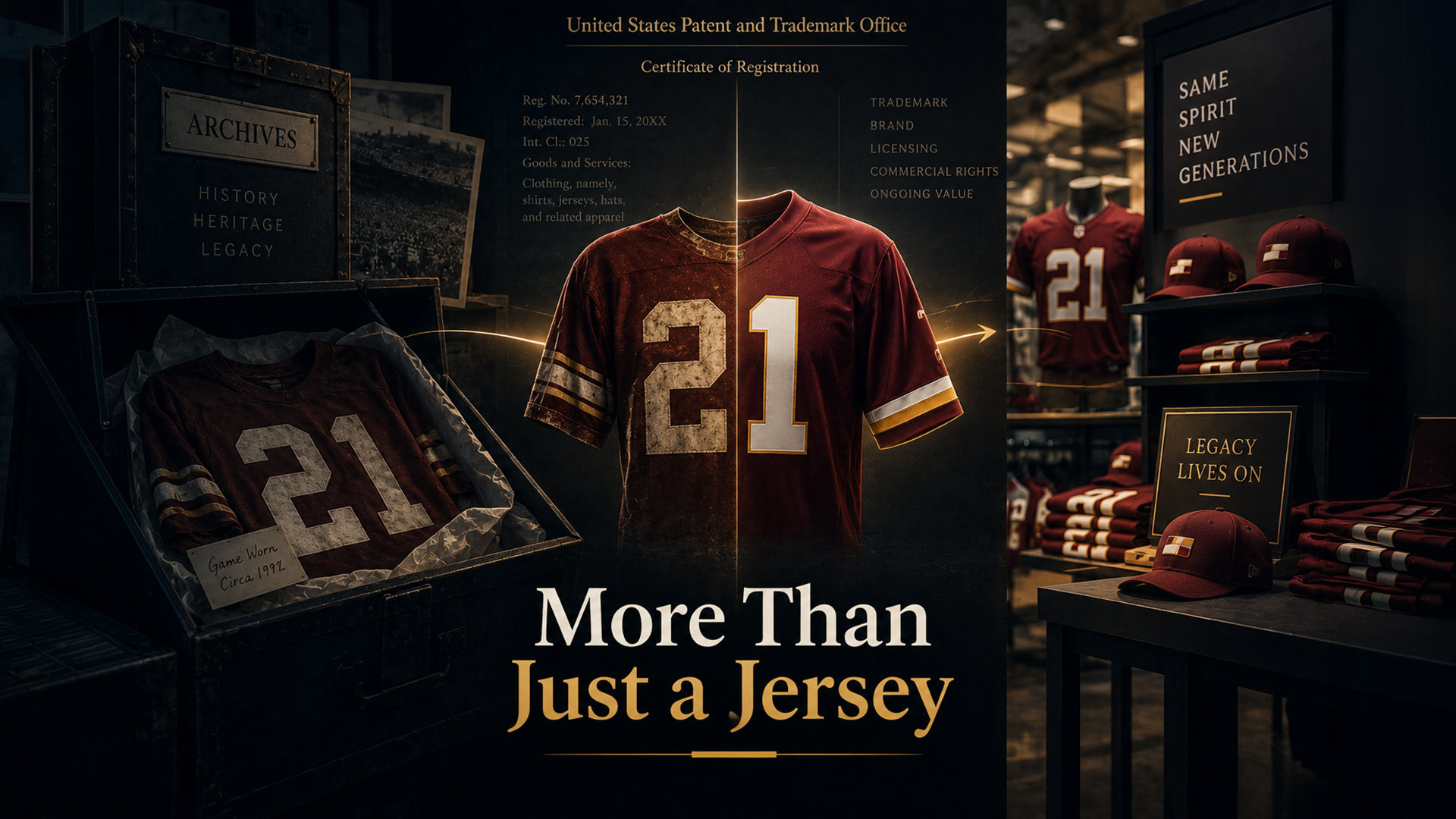
Football is back. And, if you blinked last week, you missed it. Mitchell & Ness throwbacks bearing Washington’s retired name and logo, including a nod to three of my favorite all-time players, Sean Taylor, Art Monk, and Darrell Green, hit the shelves at Northwest Stadium and were gone inside 48 hours. Fans called it nostalgia. Trademark lawyers called it something else entirely: a textbook compliance move.
Pro-Football, Inc., the corporate entity that owns the Commanders’ intellectual property, still holds roughly ten federal registrations tied to the old branding, including the name, the stylized “R” that Joe Gibbs wore on his visor through four Super Bowl runs, and assorted logo variants. The team has no intention of resurrecting any of it as its identity. So why keep spending money to sell it?
Because federal trademark law doesn’t let you park a mark in storage forever.
The Doctrine: Abandonment Isn’t Emotional, It’s Statutory
Under the Lanham Act, a registered mark isn’t a trophy you get to keep on the shelf indefinitely. In reality, it’s a license conditioned on continued use in commerce. Section 45 sets a bright-line trap: three consecutive years of nonuse creates a rebuttable presumption of abandonment. Add in the periodic maintenance filings required between years five and six, and again at each renewal, and the message from the USPTO is consistent – prove you’re still using it, or lose it.
“Use” isn’t a formality you can fake with a single hangtag buried in a warehouse. The classic legal standard requires bona fide use in the ordinary course of trade. This is real commercial activity, not a token gesture manufactured solely to preserve a filing. That’s precisely why the Commanders didn’t quietly print one shirt and call it a day; they ran an actual retail drop, moved real inventory, and generated a receipt trail an examining attorney (or a challenger’s litigator) could point to with a straight face.
Why This Matters More Than Nostalgia
Here’s the sharp-elbowed part casual fans miss: if Pro-Football, Inc. let those old registrations lapse, the marks wouldn’t just vanish, they’d become fair game. Bootleggers, novelty vendors, even a rival opportunist could theoretically stake a claim to “Redskins” branded goods without ever cutting Ashburn a check. Abandonment doesn’t create a vacuum; it creates an opportunity for somebody else to fill it. Maintaining “zombie” trademarks (marks nobody wants as a live brand identity but that carry real value or real liability if orphaned) is a deliberate, defensive strategy, and it’s more common than most business owners realize. Studios do it with dormant franchise titles. Consumer brands do it with retired product lines. The Commanders are simply doing it in front of 100,000 people wearing throwback jerseys.
There’s a credibility wrinkle here worth noting for anyone drafting a use-in-commerce declaration: courtesy of the Commanders’ own prior small-print use of “Redskins” on a Sean Taylor tee last season, the team can point to a continuous chain of genuine commercial use rather than a single resurrection event timed suspiciously close to a filing deadline. That distinction, continuous, ordinary-course use versus a manufactured one-off, is often the difference between a registration that survives a cancellation challenge and one that doesn’t.
The Practical Takeaway for Brand Owners
If you’re sitting on a legacy mark, a rebranded product line, or IP tied to a name your organization has otherwise moved on from, don’t assume registration is self-sustaining:
- Calendar your maintenance windows. Sections 8, 9, and 15 filings aren’t optional paperwork. If you miss one, the registration dies regardless of how famous the mark once was.
- Use it like you mean it. Sporadic, symbolic use invites a cancellation petition. Real inventory, real sales, real receipts.
- Document everything. If a mark’s value is primarily defensive, your paper trail is the asset.
- Weigh the optics against the law. The Commanders are taking real reputational heat from Native American advocacy groups for this drop. Legally sound and reputationally comfortable are not always the same question, and a good IP strategy accounts for both.
The Commanders will tell you this was about honoring franchise legends. The Lanham Act would tell you it was about survival of a registration. Both things can be true, and in trademark practice, they usually are.
Frankly, I just wish the folks running the football side showed half the foresight and strategic discipline their IP attorneys do.
This post is for general informational purposes and doesn’t constitute legal advice on any specific trademark portfolio or dispute.