Virginia Adult-Use Marijuana Market Overview – Production Facilities
By Aaron Tucker
As discussed in my market overview article, Virginia will offer 7 unique adult-use license types, which are largely similar to those we have seen in other state cannabis programs. In the next articles in the market overview series, I will provide a high-level overview of each of the available license types; starting with production licenses (my term, not Virginia’s). These include Cultivation, Processing, Testing, and Transportation.
Cultivation Facility
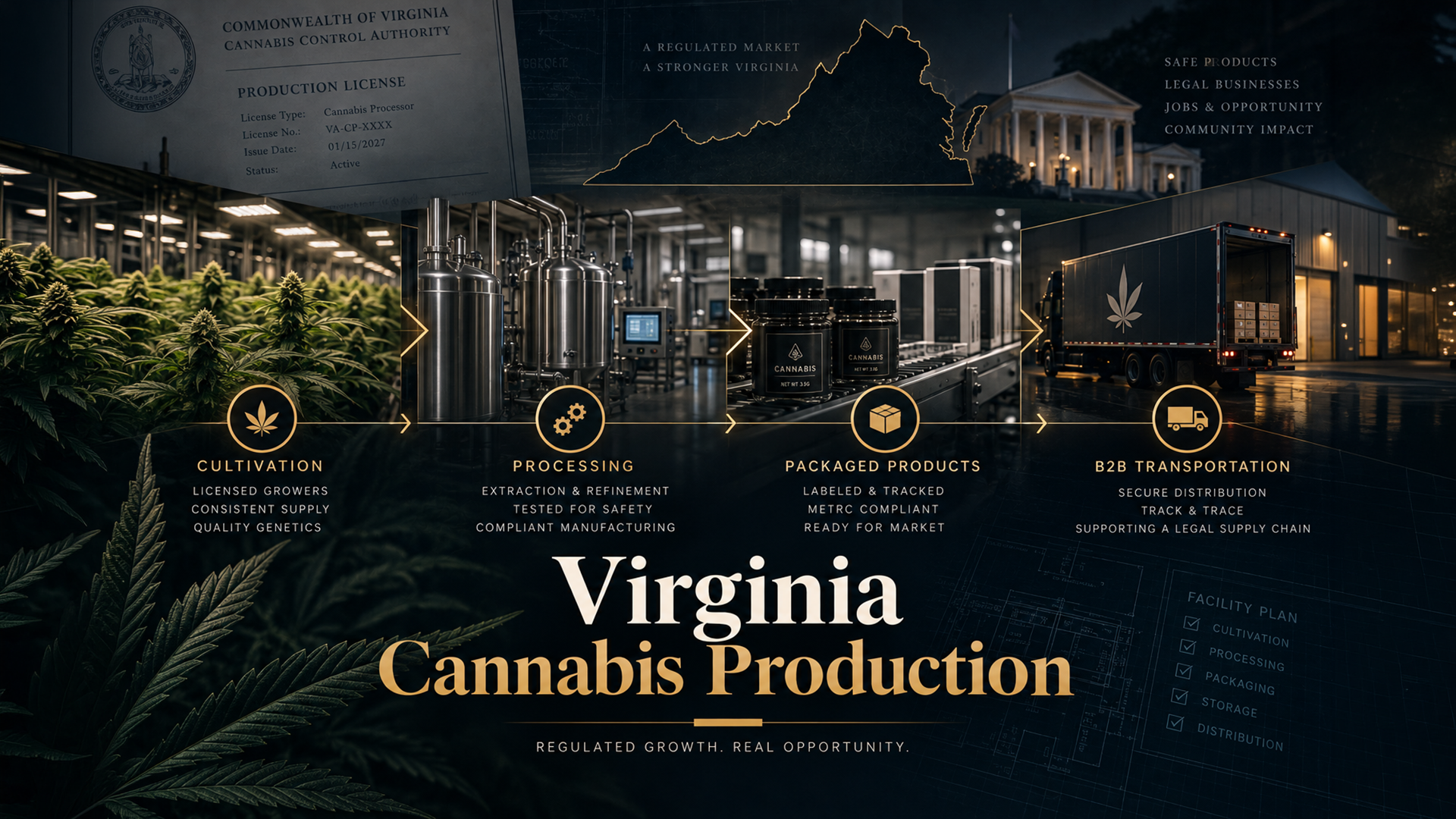
Cultivation facilities can cultivate and perform a variety of post-harvest activities. These include packaging, labeling, and, importantly, selling and transporting it to other licensed establishments. In line with regional and broader legislative trend, this means Virginia cultivators will not necessarily need to work with any kind of distribution or transport license; provided they are able to meet the usual regulated cannabis transportation requirements.
Virginia law calls for 5 tiers of cultivation facility license based on the size of the licensees maximum flower room area (or outdoor canopy); broken down as follows:
Tier I – <5,000 square feet
Tier II – <10,000 square feet
Tier III – <15,000 square feet
Tier IV – <25,000 square feet
Tier V – <35,000 square feet
The choice of cultivation tier is nuanced. By law the CCA can only license up to 5 Tier V facilities initially. While there is no statutory limit on the number of smaller facilities available, it is plausible that the CCA may announce additional initial limits on smaller licenses based on their market projections. Unlike retail licenses, CCA is given some leeway to adjust the number of cultivation licenses available as the market matures. Interested operators should model and plan for multiple cultivation tiers to maximize their opportunity in the Virginia market.
Processing Facility
Processing facilities can “process” marijuana, and, like cultivators, can package, label, and transport their products and work in process to other licensed establishments. As previously discussed, Virginia law is fairly hands-off at this time compared to other state cannabis programs when it comes to processors; though additional restrictions and guidance are expected via regulation. Unsurprisingly, processers producing edibles will be subject to additional inspection and regulation by VDACS as a food manufacturer.
Probably the most notable feature of Virginia’s system for production licensees, including cultivators and processors, is the product registration requirements. Each product must be registered with the CCA. Applications for registration will include expected THC and CBD content as well as packaging and labeling samples. Licensees will be expected, generally, to stick to the standards in their project registration, or submit a new registration before selling product. This kind of pre-approval system is ultimately consumer and taxpayer friendly, but tends to slow things down for unprepared operators.
Transportation
Sticking to the standard naming convention, “transportation” in the Virginia cannabis market means B2B transportation. Delivery to consumers is authorized, and will be discussed in a future article. As previously discussed, other adult use licenses, generally, have transportation authorization, at least in the outbound direction (i.e. transporting their products to another operator). Standalone transportation licenses would be expected to play a fairly minimal role in the Virginia system. However, these are still good licenses to keep an eye on, since regulations on B2B transportation generally will be housed within the regulations for this license type. There are also situations where transporters will likely carve out a more limited market share; particularly among smaller production licenses in the western part of the state where in-house transportation may not be particularly viable. We could also see a limited role for transporters given the outbound-only transportation authorization apparently present for certain licensees.
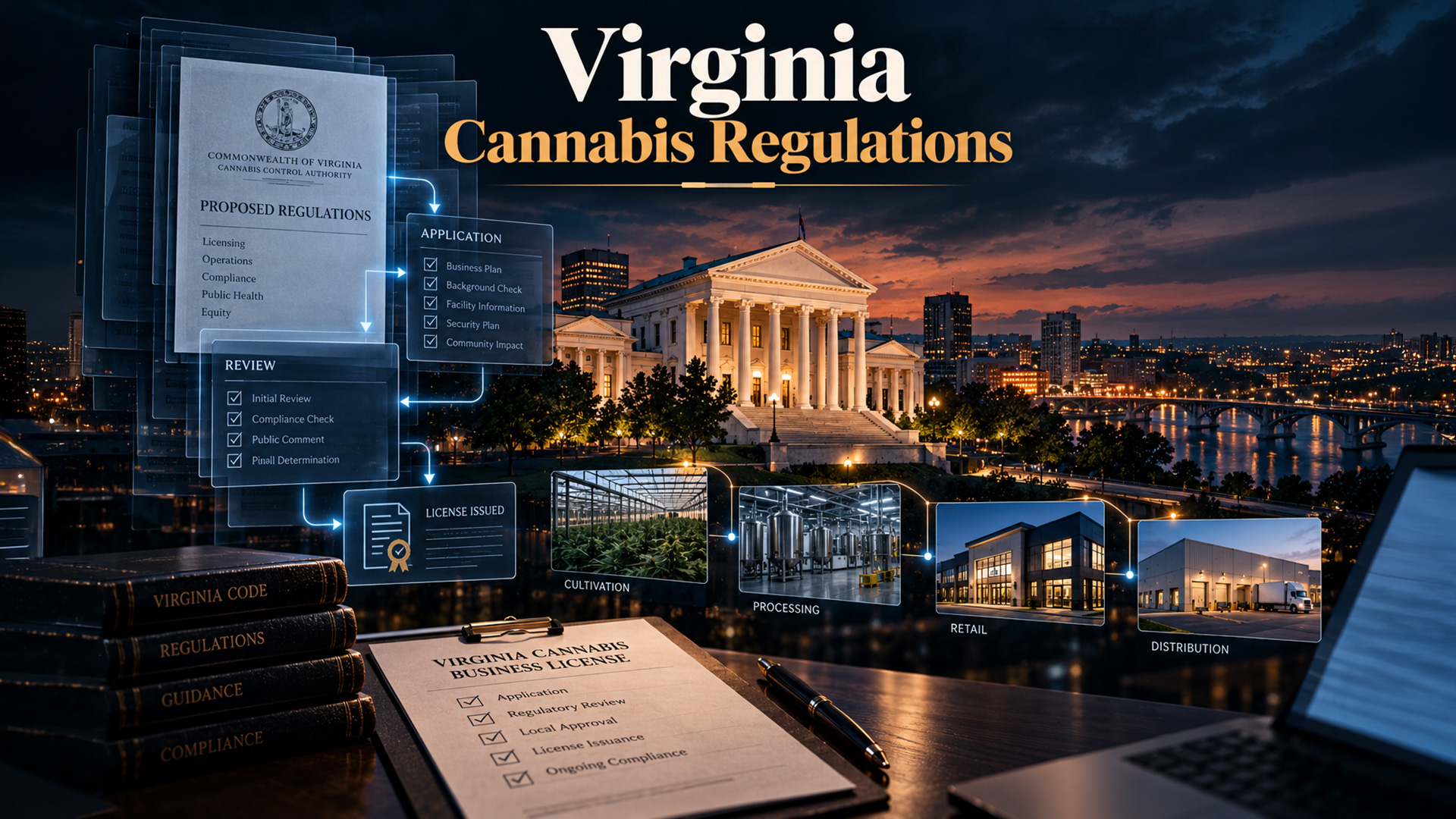
As a reminder, The CCA is required by law to begin accepting applications by February 1, 2027; with a July 1 target for first retail sales. Draft regulations were just released yesterday, so be on the lookout for a deep dive on those as well!
Contact Holon Law Partners for guidance on the Virginia cannabis licensing process.