Virginia Adult-Use Marijuana Market Overview – Retail and Delivery
By Aaron Tucker
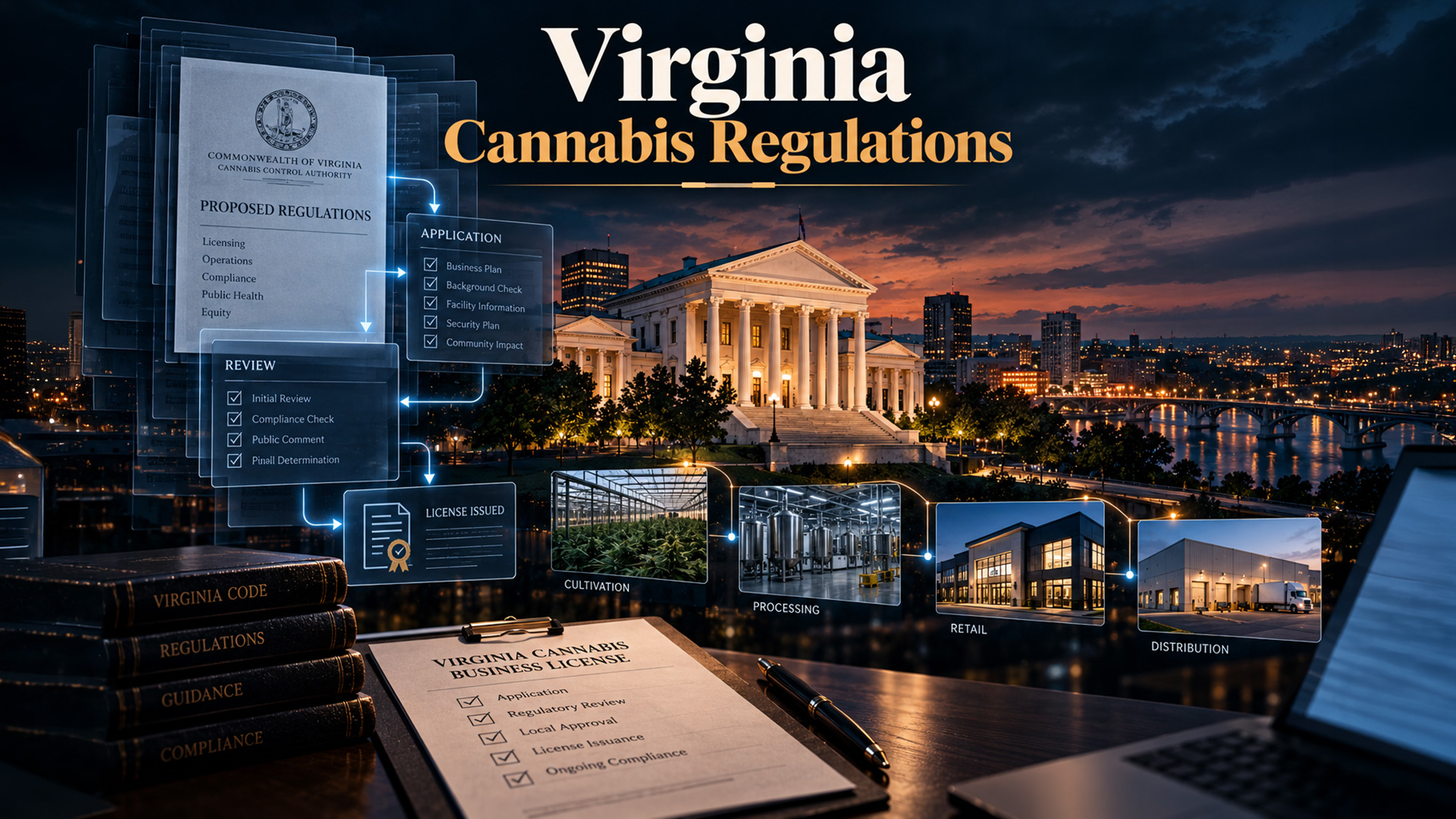
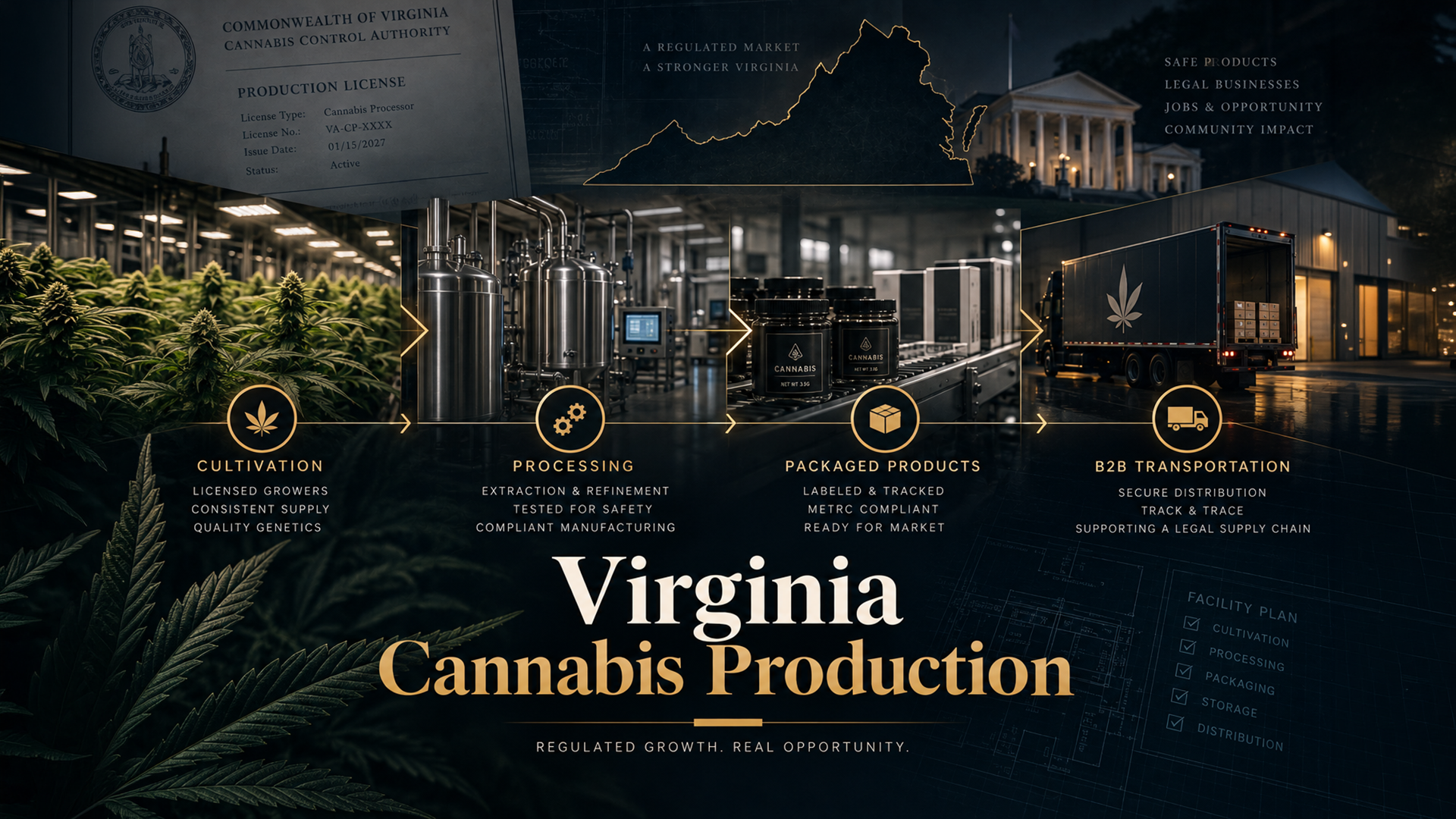
As previously covered in the market overview article, Virginia will offer 7 unique adult-use license types, which are largely similar to those we have seen in other state cannabis programs. In this article I provide an overview of the consumer-facing licenses; including dispensing and delivery licenses.
Retail Marijuana Store
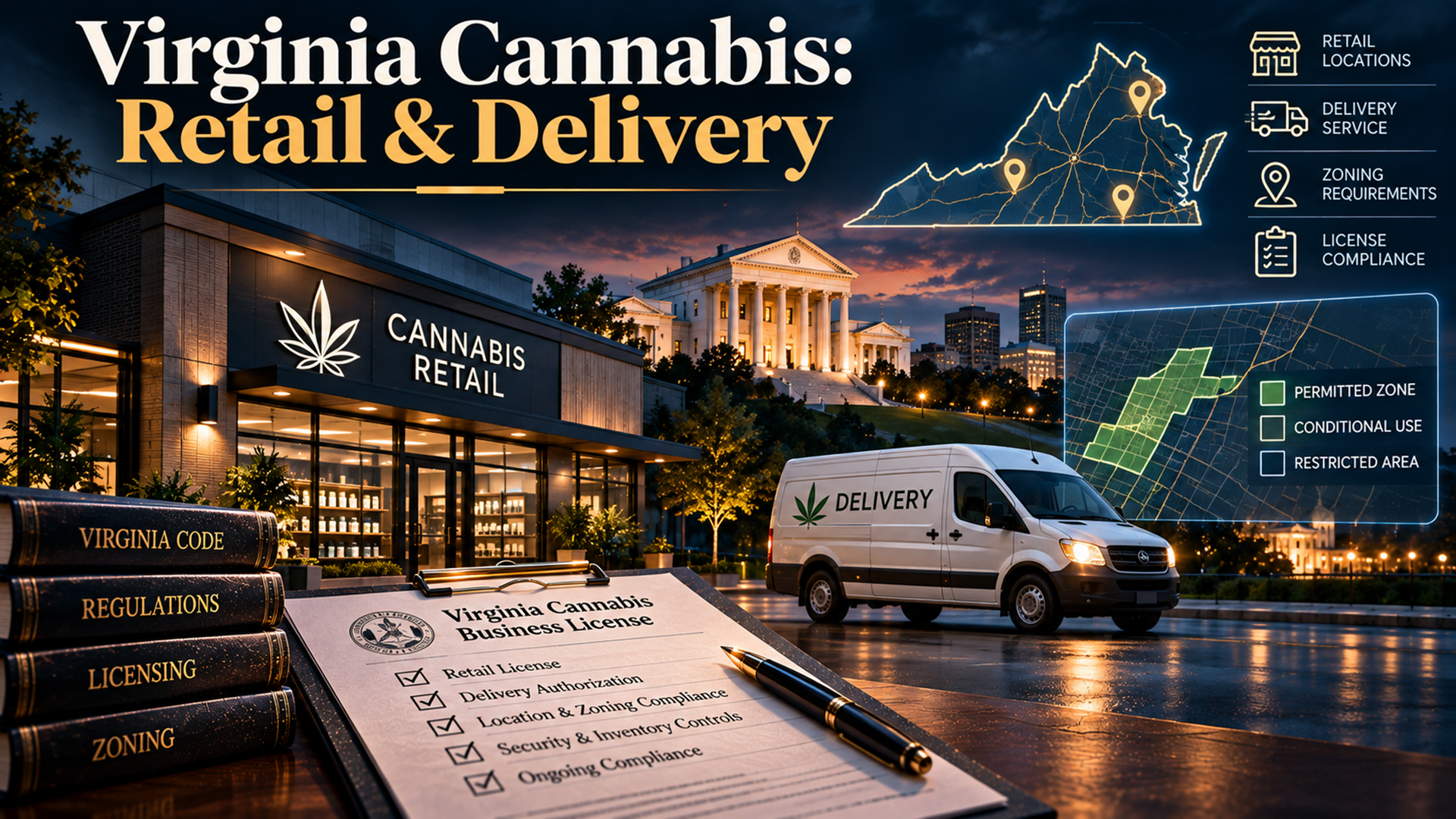
Retail marijuana stores are authorized to sell and deliver up to two ounces of marijuana or an equivalent amount of marijuana products, as well as clones and seeds, to individuals 21 and up subject to numerous restrictions (more on these in the delivery section below). In addition to offering in-house delivery to consumers, a retail marijuana store can transfer products to third-party delivery licensees and transport products to other retail stores. With only 350 standalone retail licenses statewide, expect fierce competition for available licenses.
Additionally, while a location is not expected to be required for an initial application, there are a number of specific restrictions on retail (and microbusiness) locations that prospective applicants should plan for. First, a retailer cannot locate within 1,000 feet of any hospital; public, private, or parochial school or institution of higher education; or child day program. Second, a retail store may not exceed 2,500 square feet
Furthermore, even if a retailer is outside the 1,000 foot window a retailer may not be located in a place that would “adversely affect or interfere with the normal, orderly conduct of the affairs of such facilities” or that would “adversely affect real property values or substantially interfere with the usual quietude and tranquility of (a) residence or residential area” The CCA is also required to ensure that, to the extent practicable, licenses are issued evenly throughout the Commonwealth based on population density, to establish criteria to reject licensees based on the density of retail stores in the community, and to consider community objections to licensure based on these and similar factors.
For these reasons, establishing a real estate and community engagement strategy is particularly important for retail licensees.
Delivery Operators
Delivery operators are authorized to purchase or otherwise take possession of marijuana and marijuana products from retailers and microbusinesses and deliver these products in person to consumers at residences and businesses.
However, retailers and delivery operators may not deliver products to military bases, correctional facilities, child cay centers, schools, the capitol, transportation terminals, or public gathering places like sports events, festivals, and concerts.
As a condition of licensure, any retailer, microbusiness, or delivery operator intending to offer delivery services should expect to provide comprehensive plans and procedures for the secure delivery of marijuana products in line with these and other regulatory requirements. Per current draft regulations (which are very similar to existing medical regulations on this point, and, thus, unlikely to change), these will include details on all employees and vehicles involved in delivery operations. Delivery vehicles must have secure storage compartments, secure communication and monitoring systems among other requirements.
Though the CCA is required by law to begin accepting applications by February 1, 2027; with a July 1 target for first retail sales, standalone retailers and delivery operator licenses are not expected to open until later in the spring.
Contact Holon Law Partners for guidance on the Virginia cannabis licensing process.