Like Company v. Google: EU AI Copyright Risk Shifts to Chatbot Answers
By Rita Dienes
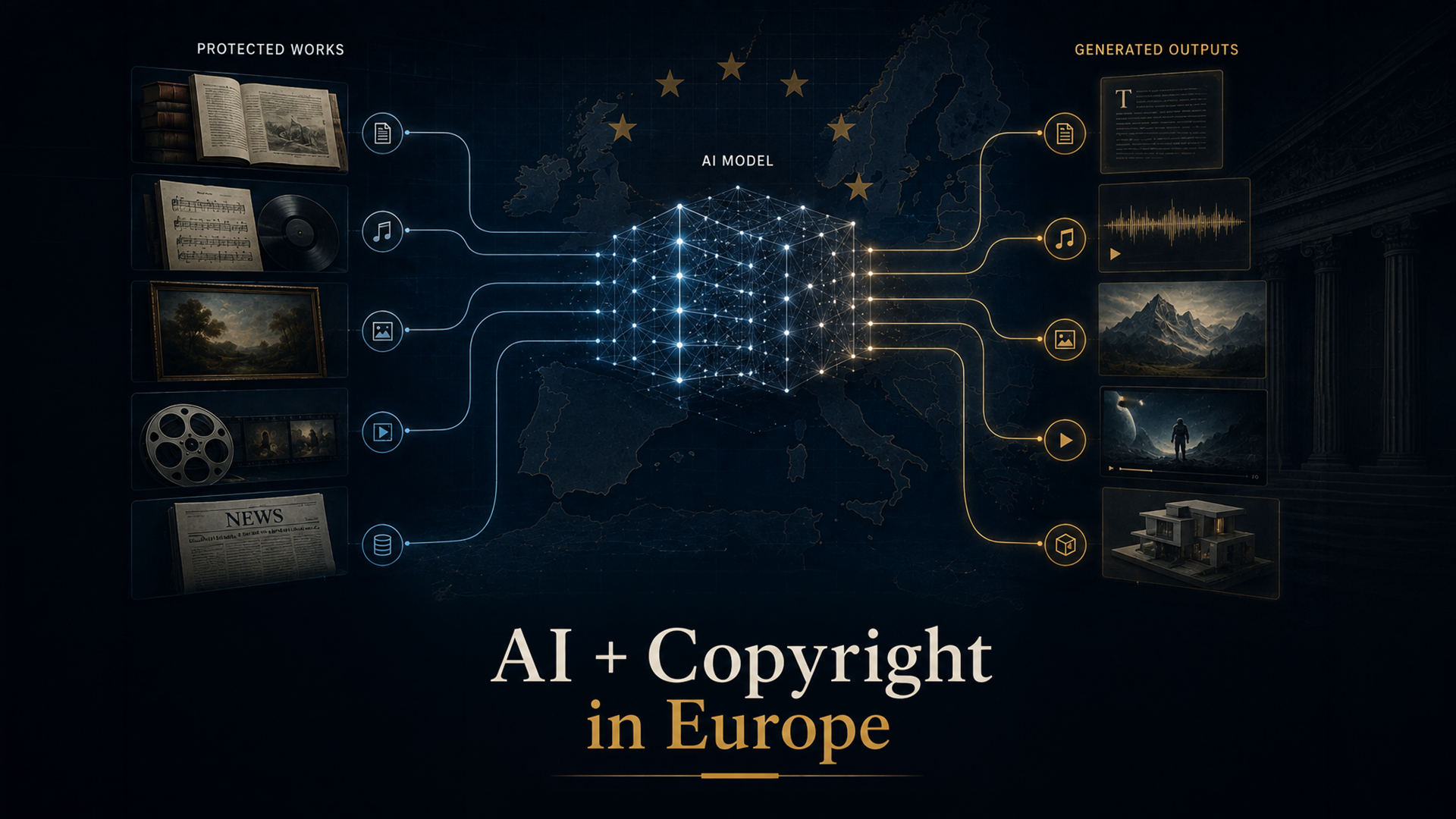
The first AI copyright opinion at the Court of Justice of the European Union shifts the risk from training data to chatbot answers
Advocate General Szpunar’s opinion of November 3, 2026, is not a judgment, but it frames the ruling that is coming. The case was referred by a Hungarian court, based on claims brought by a Hungarian publisher against Google Ireland Limited over its Gemini chatbot (formerly Bard).
The case was expected to settle whether training AI models on protected works requires permission. Contrary to those expectations, the Advocate General proposes that the Court declare the two questions on AI training inadmissible as hypothetical and answer only the questions on the chatbot’s outputs. He gives a provisional view on training, namely that it is in principle covered by the text and data mining exception, provided the content was lawfully accessed and any reservation of rights (opt-out) was respected, but he does not propose that the Court rule on that issue.
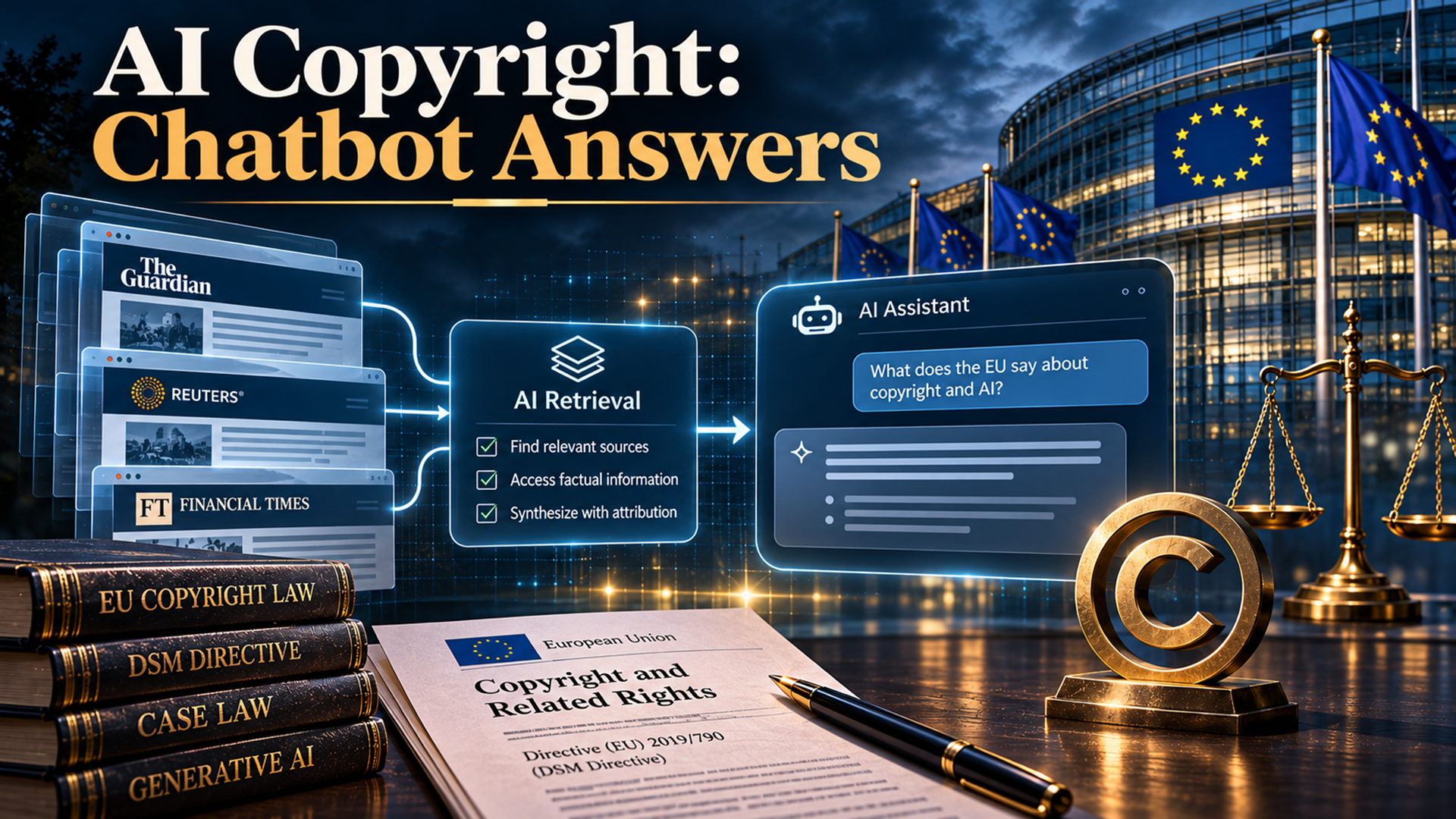
Gemini runs on Google’s Gemini large language models and retrieves live content from the web to base its answers on (a technique the industry calls retrieval-augmented generation, or grounding). Retrieval, not training, is where the Advocate General put the legal risk, and that is the part of the opinion most likely to reach an American courtroom.
When a license (permission) becomes necessary in Europe
The Advocate General takes the view that when a chatbot retrieves a press article in real time to use in its answer to a user’s question, that is an ‘online use’ of a press publication, which is the press publisher’s exclusive right under the EU’s 2019 Copyright in the Digital Single Market Directive. (The Directive gives press publishers the reproduction and making-available rights only for the online use of their press publications by online service providers (such as a website, app or platform) acting on the request of an individual user. The right lasts two years and does not cover private or non-commercial uses by individual users, hyperlinking, or individual words or very short extracts.) The text and data mining exception does not cover this retrieval. The temporary copying exception may cover the technical copies a chatbot makes during, but only if the chatbot’s end use is itself lawful.
Because the Advocate General reasoned that training is an upstream use of a publication and is done before the phase where a chatbot answers a question (downstream use), he recommended that the Court not answer the training questions referred in Like Company.
Ordinary copyright has no online-use limitation. So for everyone who is not a European press publisher (a photographer, a book publisher, a professional journal and so on), questions relating to training AI models are still open: whether using protected works to train an AI model is a reproduction at all, whether the text and data mining exception covers it, and on what conditions. Those remain to be decided by the Court.
Under the Advocate General’s approach, there are two lawful paths for a chatbot serving European users on the downstream side (where it retrieves a press article and uses it to answer a question):
- If it wants to reuse the publisher’s expression, it needs to get permission (a license to use the content); or
- It must access the content lawfully (without circumventing effective technical measures, such as a paywall or anti-scraping controls) and must produce an answer in which the publisher’s form of expression (its arrangement, structure and phrasing, even if paraphrased) is not recognizable to such an extent that the user, by reading the chatbot’s answer, can dispense with opening the original publication entirely. An answer that reports the same facts in a different form is lawful even if it diverts some readers from the original. The making-available right is engaged only if the expression is systematically recognizable in answers to related queries.
Licensing agreements between publishers and chatbot providers set the pricing for defined use, such as retrieval and grounding rights. Licensing is a continuous operating cost as long as there is ongoing retrieval.
Relevance of Like Company v Google Ireland to US litigants
Nothing decided in Luxembourg will bind an American court as precedent. But if the Court follows the Advocate General, Like Company will be relevant to US litigants.
Plaintiffs will point to the European licensing deals signed, as evidence that the market for this use is not hypothetical and can be priced.
Defendants will use their European compliance records as evidence that they took reasonable measures to stop their chatbots from reproducing protected content (meaning giving answers that reproduce the publisher’s form of expression, even in paraphrase, closely enough that the reader does not need to read the original). Damages experts will also have comparables priced specifically for retrieval and grounding that they currently largely lack.
European liability will depend on whether infringing acts are inherent to the chatbot provider’s business model or whether the company running the chatbot failed to take the measures a reasonably diligent operator would take (such as respecting publishers’ access restrictions and using output filters), in other words what safeguards it put in place.
Providers will now build and document their compliance measures, which record:
- in Europe, is part of the liability test itself. The provider is responsible for what the chatbot does where the acts are inherent to its business model, or where it failed to take the measures that a reasonably diligent operator would take. Where those measures are in place, occasional infringing answers do not make the provider liable.
- in the US, it does not defeat liability for direct infringement, which is strict liability (although courts require volitional conduct by the defendant, which is a contested question for automated systems). However, it is discoverable. Being so, it helps decide what the company knew and when, whether the infringement was willful, and whether the company could actually make the change a court would order. A document explaining why filters were installed is also the company’s own dated statement of the problem they were installed to fix.
For the background on how EU copyright law applies to AI and on the questions raised by the referring Hungarian court in Like Company v Google Ireland, see How Europe Builds AI Liability (Part II): AI in Copyright.
Conclusion
If the Court follows the Advocate General:
- Compliance with this ruling becomes a permanent operating cost for any US company whose chatbot serves European users and grounds its answers in content it retrieves from the web. In Europe a key remedy is an injunction, and because liability depends on how the chatbot was designed, compliance with an injunction means changing the product (redesigning the chatbot).
- Europe would have an AI copyright regime in which:
- Publishers cannot be deemed to have consented by leaving their content freely accessible (not putting up paywalls or blocking crawlers);
- Licensing is the only lawful way to reuse a publisher’s recognizable expression, while answers that lawfully extract only the facts remain free;
- Retrieval itself (how the chatbot fetches content from a website) is regulated: it must not circumvent paywalls or anti-scraping measures;
- Provider (the company running the chatbot) liability is decided by its business model and a diligence standard that has to be satisfied continuously; and
- The regime covers the press publishers’ right only. For other rightholders, and for AI training, the Court of Justice still has to rule.