When AI Regulation Meets the First Amendment: xAI’s Challenge to Minnesota’s “Nudification” Law
By Jay Kotzker
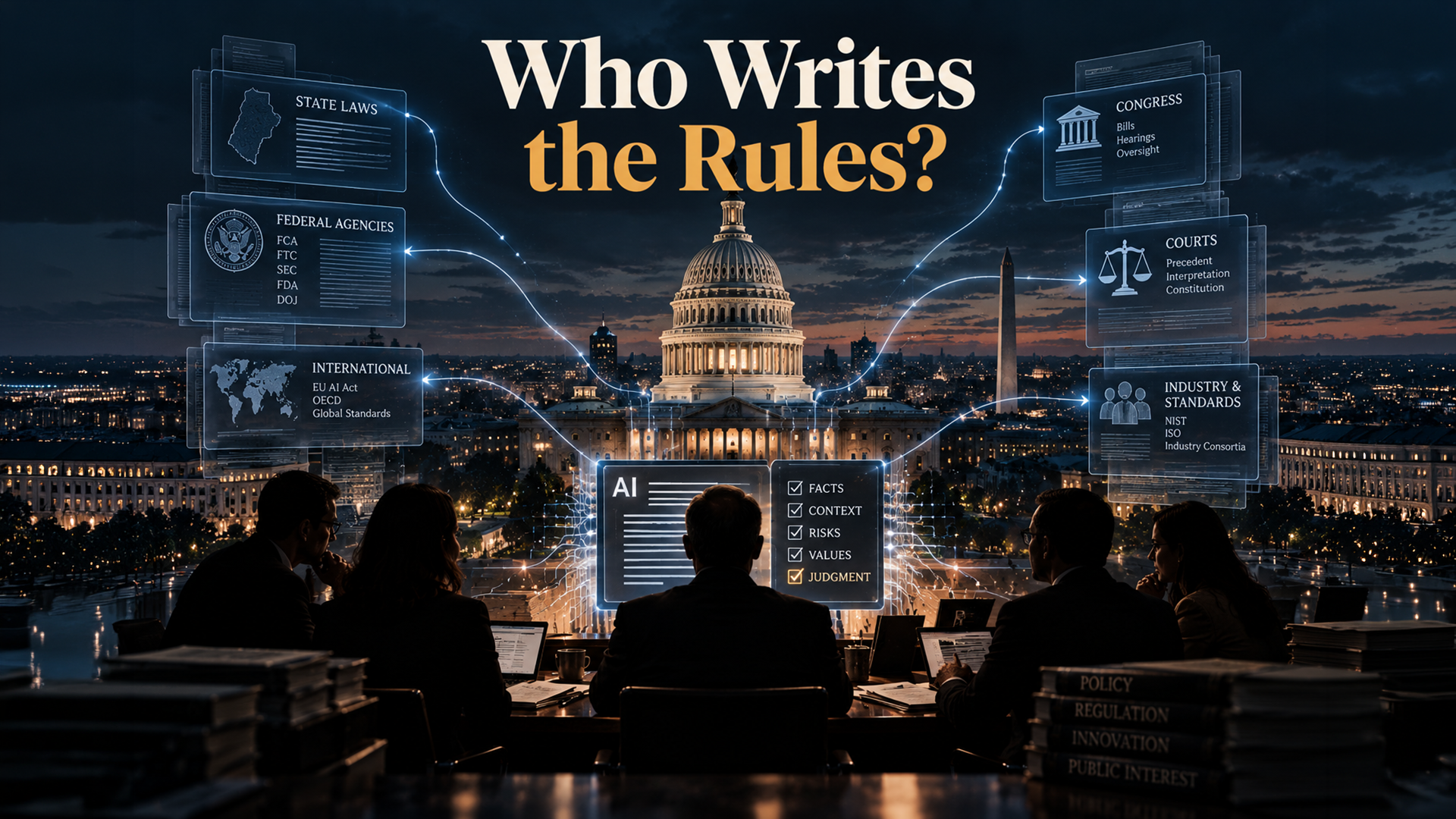
The newly filed lawsuit over Minnesota’s HF 1606 is about far more than one AI image generator. It raises a question that will increasingly define AI regulation: how far can governments go in regulating the capabilities of general-purpose AI tools when those tools can be used for both harmful and constitutionally protected purposes?
On July 27, 2026, xAI filed suit in the U.S. District Court for the District of Minnesota challenging Minnesota’s newly enacted HF 1606, a law aimed at AI-powered “nudification” technology. The statute is scheduled to take effect August 1, 2026. xAI seeks declaratory and injunctive relief, arguing that the law violates the First Amendment by imposing an overbroad, content-based restriction on protected expression.
The dispute arrives amid growing pressure on lawmakers to address one of generative AI’s most troubling applications: realistic, nonconsensual intimate imagery. But xAI’s complaint presents a more difficult question than whether governments have a legitimate interest in preventing that harm. xAI expressly acknowledges that interest. Instead, the case asks whether Minnesota has regulated the technology too broadly—and whether imposing liability on the provider of a general-purpose AI tool, rather than focusing primarily on unlawful users and distribution, crosses constitutional lines.
For companies developing, deploying, or integrating AI, the case is worth watching closely. It sits directly at the intersection of AI governance, constitutional litigation, and the regulatory challenges businesses face when technology evolves faster than the legal frameworks governing it.
Minnesota’s New Approach: Regulating the Tool
HF 1606 takes a notably aggressive approach to AI-generated imagery.
According to xAI’s complaint, the law prohibits a person that owns or controls a website, application, software program, or other service from allowing users to use that service to “nudify” an image or video. The statute also prohibits providers from nudifying content on behalf of users and from advertising or promoting covered services.
The potential consequences are significant. The Attorney General may seek civil penalties of up to $500,000 for each unlawful access, download, or use, and the statute also creates a private cause of action that may include compensatory damages, punitive damages, injunctive relief, attorneys’ fees, and other relief.
That structure matters.
Many laws addressing AI-generated intimate imagery focus on the person who creates or distributes nonconsensual content or require platforms to respond once unlawful material is identified. HF 1606 instead places substantial responsibility directly on the provider of the technology.
That shift—from regulating harmful conduct to regulating the capabilities of a general-purpose tool—is central to xAI’s challenge.
xAI’s Argument: A Legitimate Objective, but an Overbroad Law
Importantly, xAI does not argue that nonconsensual AI-generated intimate imagery should be beyond regulation.
Its complaint states that the company does not contest Minnesota’s interest in preventing dissemination of artificially generated nude images of real people without their consent. Instead, xAI argues that HF 1606 sweeps substantially beyond that objective.
The complaint focuses on several features of the statute.
First, xAI alleges that HF 1606 effectively imposes strict liability. According to the complaint, liability does not depend on whether a provider knew that its technology was being misused, intended the misuse, or deployed safeguards designed to prevent it. xAI further alleges that the statute provides no safe harbor for providers making good-faith efforts to prevent prohibited uses.
Second, xAI argues that the statute does not turn on consent. On xAI’s reading, the prohibition can therefore encompass images created with the depicted person’s permission—or potentially by the depicted person themselves.
Third, the complaint challenges Minnesota’s definition of an “intimate part.” Rather than limiting the law to commonly understood nudity, the statutory definition incorporates areas including the inner thigh, buttocks, and breast. xAI argues that this could sweep ordinary images of people in swimsuits, shorts, or shirtless into the statute’s reach.
And fourth, xAI emphasizes that liability allegedly does not require dissemination. In its view, an image generated privately and never distributed can trigger the statute just as an image disseminated publicly can.
Those are allegations and legal arguments advanced by xAI; Minnesota will have an opportunity to contest both xAI’s characterization of the statute and its constitutional conclusions.
The First Amendment Question
The constitutional theory behind the complaint may ultimately make this case important well beyond Minnesota.
xAI argues that AI-generated images and videos are forms of expression protected by the First Amendment and that using an AI system to create them does not strip that expression of constitutional protection merely because the technology is new. The complaint also advances the broader proposition that providing a tool used to facilitate expression can itself implicate First Amendment interests.
From there, xAI argues that HF 1606 is content based: whether the law applies depends upon what an AI-generated image depicts. On that theory, xAI contends that strict scrutiny applies and Minnesota must demonstrate that the law is narrowly tailored to further a compelling governmental interest using the least restrictive means.
The distinction is consequential.
Few would seriously dispute that governments have compelling reasons to address nonconsensual intimate imagery, particularly where AI dramatically reduces the cost and technical difficulty of producing convincing synthetic material. The harder constitutional question is how governments may pursue that objective.
A law directed narrowly at knowingly creating or distributing nonconsensual intimate imagery presents one set of issues. A law imposing potentially enormous liability on a general-purpose technology provider whenever a user succeeds in generating broadly defined prohibited content presents another.
The litigation may therefore help courts begin drawing boundaries between regulation of harmful AI-enabled conductand regulation of AI systems as instruments of expression.
The Compliance Problem: What Does “Reasonable AI Governance” Mean?
For businesses working with generative AI, another aspect of the lawsuit may prove equally important: HF 1606 potentially tests whether responsible compliance efforts matter when assigning liability.
xAI alleges that its terms prohibit using Grok to nudify real people, depict people pornographically, violate privacy or publicity rights, sexualize children, or circumvent safety measures. The company also alleges that it uses account suspensions and terminations and other enforcement mechanisms against violators.
Whether those measures are adequate is not resolved simply because xAI says they exist. But the legal issue they illuminate is significant.
As AI regulation matures, legislatures and courts will increasingly have to determine whether liability should distinguish among providers that:
- intentionally facilitate harmful conduct;
- knowingly tolerate it;
- negligently fail to implement appropriate safeguards; or
- implement substantial safeguards that determined users nevertheless circumvent.
That distinction is fundamental to developing workable AI governance.
A regulatory regime that recognizes reasonable controls, monitoring, incident response, documentation, and remediation creates incentives for companies to invest in compliance. A regime imposing effectively unavoidable liability regardless of safeguards can produce a different incentive: disable the functionality, withdraw from the jurisdiction, or substantially restrict otherwise lawful uses.
Indeed, xAI alleges that because of HF 1606’s potential penalties, it plans to restrict Grok Imagine’s image-editing functionality in Minnesota when the statute takes effect.
That is precisely where AI policy becomes operational business strategy.
The Regulated-Industries Lesson: Fifty States, Potentially Fifty Rulebooks
Although this dispute concerns generative AI, the underlying regulatory dynamic will be familiar to companies operating in heavily regulated and emerging industries.
Cannabis, hemp, fintech, privacy, digital health, and other evolving markets have repeatedly confronted the same problem: innovation develops nationally while regulation develops jurisdiction by jurisdiction.
AI companies are increasingly confronting that reality.
A platform may be technically capable of offering the same product nationwide, but state-specific rules can require different safeguards, disclosures, product configurations, age restrictions, content controls, or—in extreme cases—geographic limitations on functionality.
The result is not merely a legal research problem. It is an architecture problem.
Businesses may need systems capable of translating jurisdiction-specific legal requirements into product-level controls: geofencing, feature restrictions, content moderation rules, escalation procedures, audit trails, terms-of-service provisions, vendor obligations, and incident-response protocols.
For companies in regulated industries that are also adopting AI, those layers can compound. A cannabis company deploying generative AI, for example, may need to consider not only AI-specific laws but advertising restrictions, consumer-protection rules, privacy requirements, intellectual-property considerations, and industry-specific regulations simultaneously.
The lesson is increasingly clear: AI compliance cannot live exclusively in the legal department. It must be integrated into product design and enterprise risk management.
A Broader Regulatory Patchwork Is Emerging
The Minnesota dispute also illustrates the different regulatory models governments are experimenting with.
As the reporting surrounding the lawsuit notes, federal and state governments have already adopted laws addressing deepfakes and nonconsensual intimate imagery through different mechanisms. The federal TAKE IT DOWN Act, for example, addresses publication of certain nonconsensual intimate depictions and establishes notice-and-removal obligations for covered platforms.
xAI relies on those alternatives in its complaint, arguing that existing Minnesota and federal laws are more narrowly targeted because they incorporate concepts such as nonconsent, dissemination, knowledge, and more specifically defined intimate imagery.
Minnesota, by contrast, has chosen to regulate the availability and use of the underlying technological capability more directly.
That difference may become one of the defining debates in AI law:
Should governments regulate harmful outputs and conduct, or should they regulate the capabilities that make those harms possible?
The answer is unlikely to be binary. Certain AI applications may justify controls at the model or platform level. Others may be better addressed through user liability, transparency requirements, notice-and-removal systems, technical safeguards, or combinations of those approaches.
But the constitutional and commercial consequences can differ dramatically depending on where lawmakers draw the line.
What Businesses Should Watch
Three aspects of the Minnesota litigation deserve particular attention.
- First, the constitutional treatment of generative AI. Courts are beginning to confront whether—and under what circumstances—AI-assisted creation, model outputs, and the provision of generative tools implicate established First Amendment doctrines.
- Second, the emerging standard of care for AI providers. Legislatures will continue wrestling with knowledge requirements, safe harbors, technical safeguards, moderation practices, and the extent to which providers should be responsible for users who circumvent their controls.
- Third, the accelerating state-law patchwork. Businesses deploying AI nationally should expect product design and compliance strategy to become increasingly intertwined. Waiting until enforcement begins to determine how a state law maps onto a technical system may be an increasingly expensive approach.
Where AI Governance and Litigation Converge
xAI v. Ellison is still at its earliest stage. The complaint represents xAI’s allegations and constitutional arguments, not a judicial determination that HF 1606 is unlawful. Minnesota will have the opportunity to defend the statute and articulate the governmental interests and constitutional theories supporting it.
But the case already demonstrates something important about the next phase of AI law.
The central legal questions are moving beyond whether artificial intelligence should be regulated. The harder questions concern how regulation should allocate responsibility among developers, platforms, users, and downstream businesses—and how governments can address genuine technological harms without unnecessarily restricting lawful innovation and expression.
Those questions sit at the intersection of litigation, AI governance, and regulated-industry strategy. For businesses operating in rapidly evolving markets, effective legal planning increasingly requires all three disciplines at once.
Holon Law Partners monitors emerging developments in artificial intelligence, technology regulation, complex litigation, and regulated industries. Our attorneys work collaboratively with businesses navigating evolving legal frameworks, technology risk, disputes, and compliance strategy.
This article is provided for general informational purposes only and does not constitute legal advice. The laws and litigation discussed are developing, and readers should consult qualified counsel regarding their particular circumstances.