
Holon Perspectives: Eric Postow on Why Self-Driving Cars Are a Societal Infrastructure Problem, Not Just a Product Problem
Holon Law Partners is proud to share that Eric Postow was recently featured as a guest columnist, offering a holistic take on one of the most consequential technology races of the decade: the global push toward autonomous vehicles.
In the words of the editor: “In this guest column, US attorney Eric Postow, of Holon Law Partners, brings a holistic perspective to self-driving, considering the multiple intricate, interconnected relationships of automated vehicles operating within broader emerging ecosystems of data, regulatory architecture, and urban design.”
That framing captures exactly why we wanted to spotlight this piece. It’s Holon theory in action — the idea that no innovation, no business, and no vehicle moves in isolation. Below is a look at Eric’s core argument, with a link to the full column at the bottom.
The Big Idea: The Car Isn’t the Unit of Analysis — The City Is
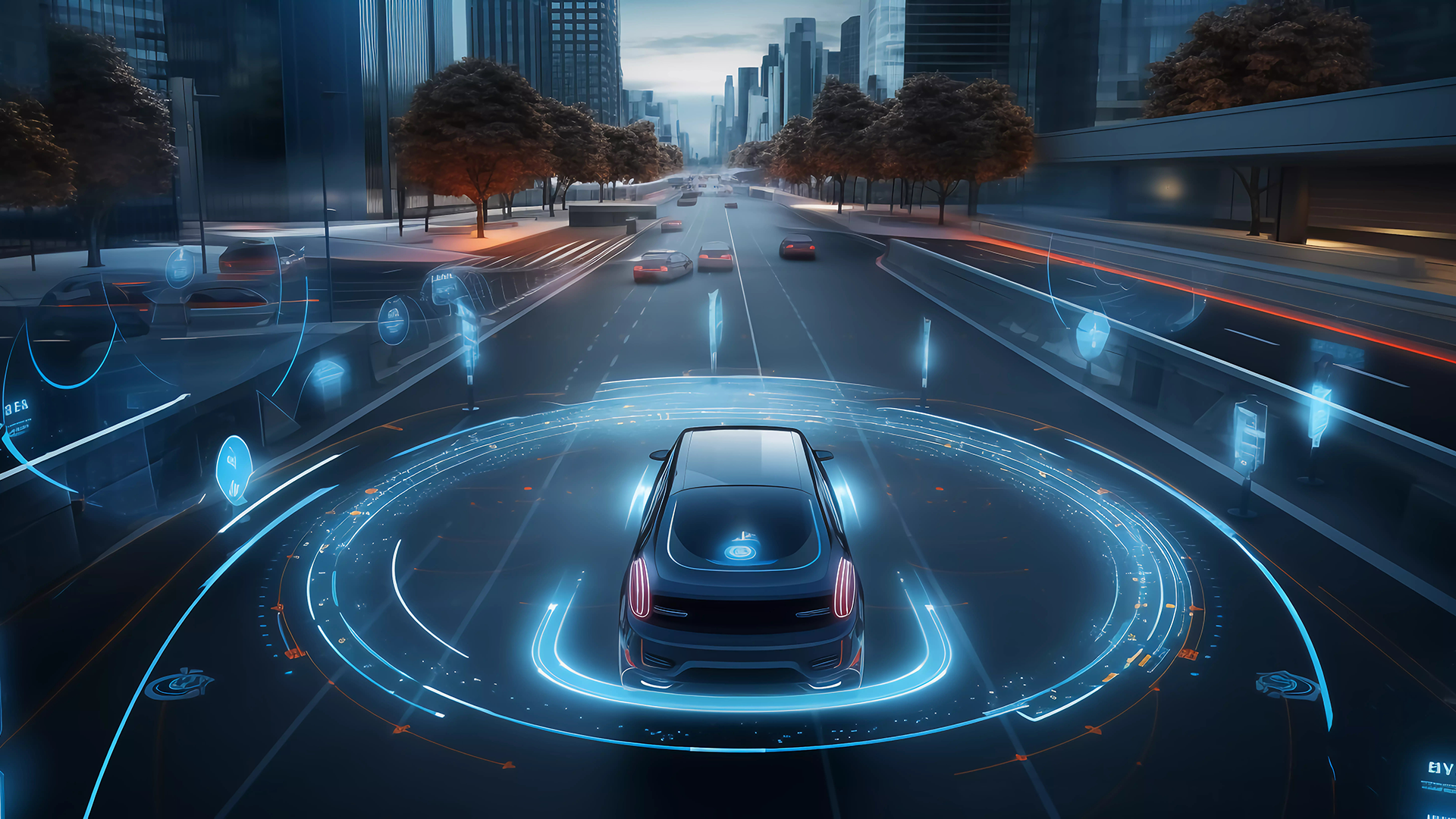
Eric’s central thesis is straightforward but easy to overlook amid the hype around self-driving technology: building a great autonomous vehicle is not primarily a hardware or software achievement. It’s an ecosystem achievement. Progress up the SAE automation ladder, from today’s widely deployed Level 2 systems toward true Level 4 autonomy, depends less on what’s inside the vehicle and more on the digital and physical infrastructure surrounding it: real-time traffic data, connected mapping, vehicle-to-everything communication, and coordinated regulatory frameworks.
China as a Case Study in “Nested Intelligence”
Eric points to China, and Shenzhen in particular, as the clearest example of this ecosystem-first approach. Rather than treating autonomous vehicles as standalone consumer products, Chinese policy has embedded them into a broader national strategy, pairing automakers with massive public investment in computing infrastructure, urban AI systems, and standardized data networks. The result, as he describes it, is an environment where the vehicle becomes just one node in a much larger, deliberately engineered system.
He’s careful not to present this as a model to simply copy. The same centralized approach that accelerates deployment also raises real questions around data governance, surveillance, and civil liberties, tradeoffs that democratic societies will need to weigh on their own terms.
Where the US and UK Stand
Turning to the US and UK, Eric identifies a more fragmented picture: pockets of world-class innovation, strong research institutions, leading AV companies, thoughtful legislation like the UK’s Automated Vehicles Act, but without the coordinated, city-scale infrastructure buildout that turns promising pilots into mass-market systems. His read: both countries have treated autonomous vehicles largely as corporate technology investments, with supporting infrastructure expected to catch up later, rather than building the infrastructure and the vehicle in tandem.
Why This Matters Beyond the Auto Industry
For Holon’s clients working in emerging technology, AI governance, and regulated industries, Eric’s column is a useful reminder that the businesses best positioned to scale are often the ones thinking hardest about the systems their products depend on regulatory frameworks, data-sharing arrangements, interoperability standards — not just the product itself. That’s a lens that applies well beyond autonomous vehicles.
Read Eric’s full column here: https://carsofthefuture.co.uk/guest-column-eric-postow-automated-economy/
This post is provided for informational and business development purposes only. It does not constitute legal advice or create an attorney-client relationship.