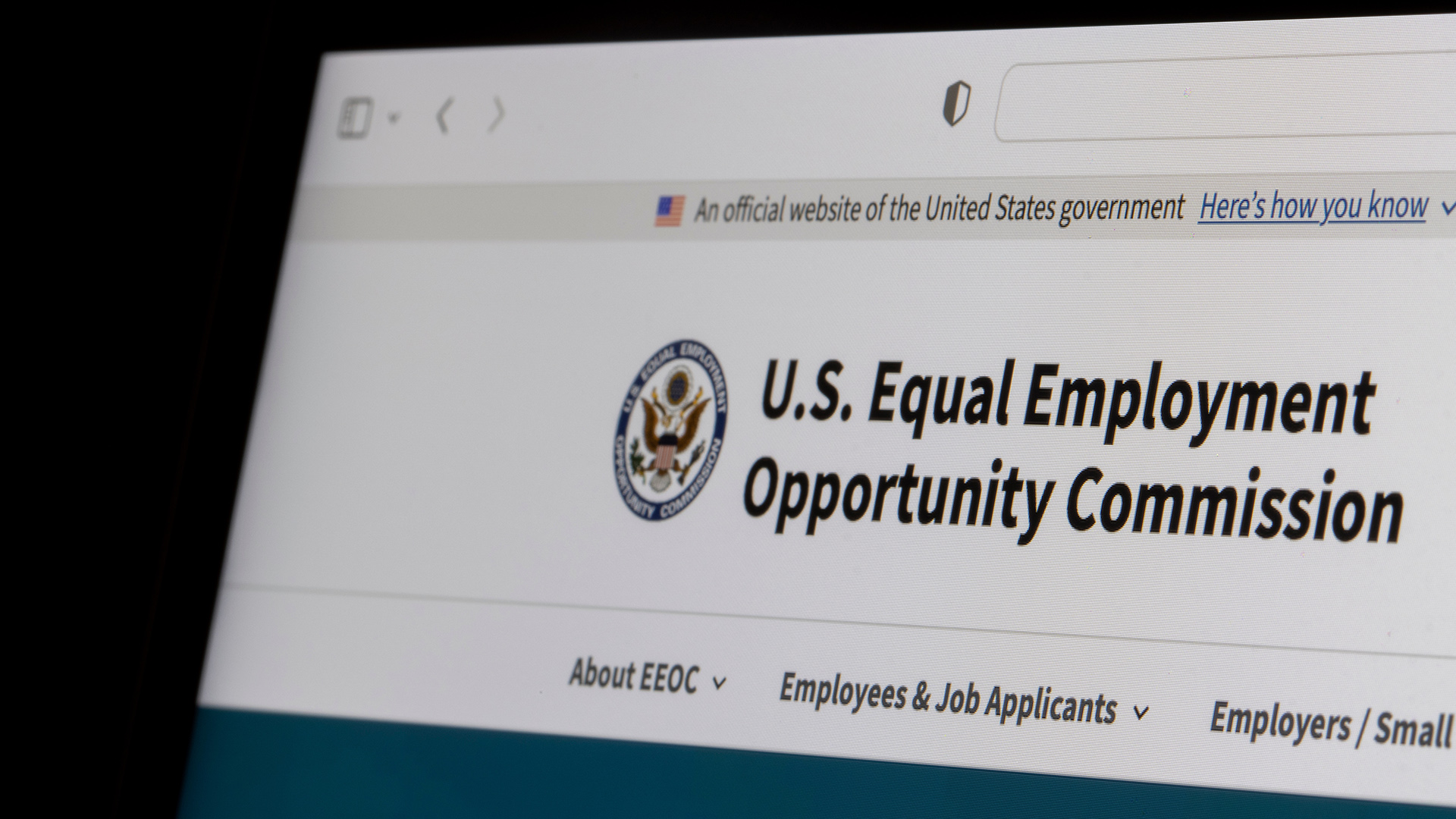

The EEOC Is Withdrawing Its Criminal-Records Guidance. The Legal Risk Remains.
By Jason Ehrenberg, Holon Law Partners LLP · October 2026
Employers will soon read that the Equal Employment Opportunity Commission has abandoned its guidance on criminal background checks. The report is accurate as far as it goes, but it invites a mistaken inference: that the legal constraints on the use of arrest and conviction records have loosened. They have not. What is changing is the identity of the enforcer, not the substance of the obligation. This article explains the development, the doctrine that survives it, and the adjustments employers should consider.
The development
On October 6, 2026, the Office of Information and Regulatory Affairs within the Office of Management and Budget received a draft final rule from the EEOC titled “Rescission of Enforcement Guidance on the Consideration of Arrest and Conviction Records in Employment Decisions Under Title VII of the Civil Rights Act.” Because the agency has styled the measure as a final rule, the 2012 guidance will likely be withdrawn effective upon publication once review is complete. The timing of that review is uncertain.
Replacement guidance is unlikely. The administration’s practice with comparable rescissions suggests the agency will leave the field vacant rather than substitute a new framework.
The 2012 framework
For fourteen years, the guidance has served as the reference point around which most employers designed their screening programs. It identified two routes by which reliance on criminal history may violate Title VII.
The first is disparate treatment: applying a criminal-history standard differently on the basis of a protected characteristic, such as disqualifying applicants of one race for a marijuana conviction while hiring applicants of another race with the same record. That is intentional discrimination, and its unlawfulness is not in dispute.
The second is disparate impact: a facially neutral exclusion, uniformly applied, that disproportionately screens out a protected group. Disproportion alone does not establish liability. The employer may defend the practice by demonstrating that it is job related for the position and consistent with business necessity, and the plaintiff may still prevail by identifying a less discriminatory alternative employment practice that the employer refuses to adopt. 42 U.S.C. § 2000e-2(k)(1)(A).
To give content to the business-necessity defense, the guidance directed employers to a “targeted screen” built on three factors: the nature and gravity of the offense, the time elapsed since the offense or completion of the sentence, and the nature of the job held or sought. Those factors derive from the Eighth Circuit’s Green v. Missouri Pacific Railroad litigation. In 1975, the court invalidated the railroad’s absolute refusal to hire anyone convicted of an offense other than a minor traffic violation, Green v. Missouri Pac. R.R. Co., 523 F.2d 1290 (8th Cir. 1975), and its subsequent opinion, 549 F.2d 1158 (8th Cir. 1977), is the source the guidance cites for the three-factor screen. The guidance supplemented the screen with an individualized assessment: notice to the individual, an opportunity to respond, and genuine consideration of that response, including evidence of rehabilitation and post-conviction employment history. It further cautioned that an arrest, standing alone, will rarely justify an adverse decision, because an arrest is not proof of criminal conduct.
The policy context
The rescission is the latest step in a deliberate federal withdrawal from disparate impact enforcement.
- April 2025. Executive Order 14281, “Restoring Equality of Opportunity and Meritocracy,” directed federal agencies to eliminate disparate impact liability “to the maximum degree possible” and to identify rules for amendment or repeal.
- September 2025. EEOC leadership reportedly directed staff to close pending disparate impact matters.
- June 2026. The Commission rescinded the Strategic Enforcement Plan it adopted in 2023 and reoriented its priorities toward intentional discrimination. Separately, the Department of Justice’s Office of Legal Counsel issued an opinion concluding that the EEOC’s disparate impact guidelines are unlawful and unconstitutional. That opinion reflects the executive branch’s legal position; it does not bind the courts or private litigants, and it does not alter the text of Title VII.
Withdrawing guidance that rests substantially on disparate impact theory follows naturally from these steps.
What the rescission does not change
Disparate treatment remains unlawful and remains an enforcement priority. Inconsistent application of a background-check policy exposes an employer regardless of the guidance’s status. Ricci v. DeStefano, 557 U.S. 557 (2009), is a reminder that Title VII addresses both theories simultaneously and that courts closely scrutinize the line between avoiding disparate impact and engaging in disparate treatment.
Disparate impact remains statutory law. An agency can withdraw guidance; it cannot amend Title VII. The theory originates in Griggs v. Duke Power Co., 401 U.S. 424 (1971), and Congress codified it in the Civil Rights Act of 1991, 42 U.S.C. § 2000e-2(k). Because the theory is codified, only Congress can eliminate it. An EEOC decision not to pursue these claims means charging parties will receive notices of right to sue, and private plaintiffs remain free to proceed.
The governing case law is unaffected. The leading appellate decision on criminal-record screens, El v. Southeastern Pennsylvania Transportation Authority, 479 F.3d 232 (3d Cir. 2007), remains good law, and in important respects it favors employers: a criminal-history policy, even a bright-line rule, can satisfy business necessity if it accurately, though not perfectly, distinguishes applicants who present an unacceptable level of risk from those who do not. El also illustrates the evidentiary burden that holding entails. The transit authority prevailed because it offered empirically grounded expert testimony linking its policy to the risks of the position, and the plaintiff did not rebut it. A policy lacking comparable support is the kind of categorical exclusion Green rejected.
The effect of the rescission will itself be litigated. Employers will argue that the withdrawal weakens claims premised on the guidance’s framework; plaintiffs will respond that the guidance never created the doctrine, so its withdrawal changes nothing. Courts will resolve that question over the coming years, and employers should not plan on prevailing.
The Fair Credit Reporting Act is unaffected. An employer obtaining a report from a consumer reporting agency must first provide a clear and conspicuous written disclosure, in a document consisting solely of the disclosure, and obtain written authorization. 15 U.S.C. § 1681b(b)(2). Before taking adverse action based on the report, the employer must provide the individual a copy of the report and a summary of rights. Id. § 1681b(b)(3). These requirements generate substantial class-action exposure. The Ninth Circuit has held that including a liability waiver in the disclosure form is a willful violation, Syed v. M-I, LLC, 853 F.3d 492 (9th Cir. 2017), and the Third Circuit has held that failing to provide the report before adverse action inflicts a concrete injury sufficient for standing, Long v. Southeastern Pennsylvania Transportation Authority, 903 F.3d 312 (3d Cir. 2018). Standing for purely procedural violations remains contested after TransUnion LLC v. Ramirez, 594 U.S. 413 (2021), but that uncertainty is not a compliance strategy.
The states are moving in the opposite direction. On September 17, 2026, the attorneys general of fourteen states, including New York, California, Illinois, Massachusetts, and Washington, issued joint guidance affirming that disparate impact liability remains lawful and enforceable under state and federal law, and that executive orders cannot displace statutory protections. The guidance addresses employment alongside lending, housing, and algorithmic decision-making, and it signals a clear intent to fill the federal enforcement gap. Many state anti-discrimination statutes independently recognize disparate impact.
The New York framework
For New York employers, the rescission has limited practical effect, because state and city law already mandate much of what the guidance merely recommended.
- Correction Law Article 23-A prohibits denying employment on the basis of a prior conviction unless there is a direct relationship between the offense and the position, or the employment would involve an unreasonable risk to property or to the safety or welfare of specific individuals or the general public. N.Y. Correct. Law § 752. The employer must weigh eight statutory factors, including the time elapsed and evidence of rehabilitation, § 753, and on request must provide a written statement of reasons within thirty days, id. § 754.
- The New York State Human Rights Law prohibits inquiring about or acting on arrests that did not result in conviction, adjournments in contemplation of dismissal, sealed matters, and youthful offender adjudications, and it makes violations of Article 23-A actionable as unlawful discriminatory practices. N.Y. Exec. Law § 296(15)–(16).
- The New York City Fair Chance Act generally bars criminal-history inquiries until after a conditional offer. Before rescinding an offer, the employer must provide its Article 23-A analysis on the Commission on Human Rights’ Fair Chance Notice, furnish the record relied upon, and allow at least five business days for a response, holding the position open in the interim. Amendments effective in 2021 extended these protections to pending arrests and to current employees. N.Y.C. Admin. Code § 8-107(11-a).
- The Clean Slate Act, N.Y. Crim. Proc. Law § 160.57, effective November 16, 2024, provides for automatic sealing of many convictions, generally three years after sentencing or release for misdemeanors and eight years for felonies, subject to exclusions. A record a vendor reports today may be sealed tomorrow. The statute also offers employers a measure of protection: a sealed conviction generally may not be introduced as evidence of negligent hiring, and an employer acting reasonably and in good faith has no duty to investigate a sealed conviction.
The individualized assessment the EEOC is abandoning is, in New York, a legal requirement.
Recommendations
Retain the existing framework. Screening on the Green factors with an individualized assessment remains the strongest defense to a private disparate impact claim, and it is legally required in New York State, New York City, California, and a growing number of other jurisdictions. Abandoning it yields little and creates substantial exposure.
Audit for consistency. As federal enforcement narrows to intentional discrimination, inconsistent application becomes the principal source of federal risk. Decisions should be documented, and similarly situated candidates should be treated alike.
Review FCRA compliance. Examine disclosure and authorization forms, and the pre-adverse and adverse action workflow, with your consumer reporting agency. Technical defects in these documents remain the most common basis for class litigation in this area.
Examine automated screening. An applicant tracking system or vendor configuration that automatically rejects candidates on the basis of criminal history may amount to a blanket exclusion the employer never deliberately adopted, which is precisely the kind of categorical bar courts have rejected. State enforcers and courts are actively scrutinizing algorithmic screening tools for disparate impact.
Conduct adverse impact analysis under privilege. Employers should know whether their screens disproportionately exclude protected groups, and that analysis should be performed at the direction of counsel so that it is protected.
Design for the most demanding jurisdiction. Multistate employers should adopt a baseline policy that satisfies the strictest jurisdiction in which they hire, with state- and city-specific addenda where requirements diverge.
Train decision-makers. Most background-check liability originates with a hiring manager who is unfamiliar with the governing rules.
Conclusion
The EEOC’s retreat from disparate impact does not reduce employers’ risk; it relocates it to private plaintiffs, to state attorneys general, and to state and local laws that already exceed the federal guidance. Employers that maintain a considered, documented, job-related screening process are well positioned. Employers that treat the rescission as license to screen without constraint are likely to find themselves defending that choice in litigation.
Holon’s Employment Law Group advises employers on background-check policies, vendor agreements, and hiring workflows, and is available to review your program.
This article is for informational purposes only and does not constitute legal advice. Reading it does not create an attorney-client relationship.
Jason Ehrenberg is the head of Holon Law Partners’ Employment Law Group and serves as the firm’s Lead Litigator.