
Virginia’s Cannabis Compromise: What Moved, What Held, and What’s New
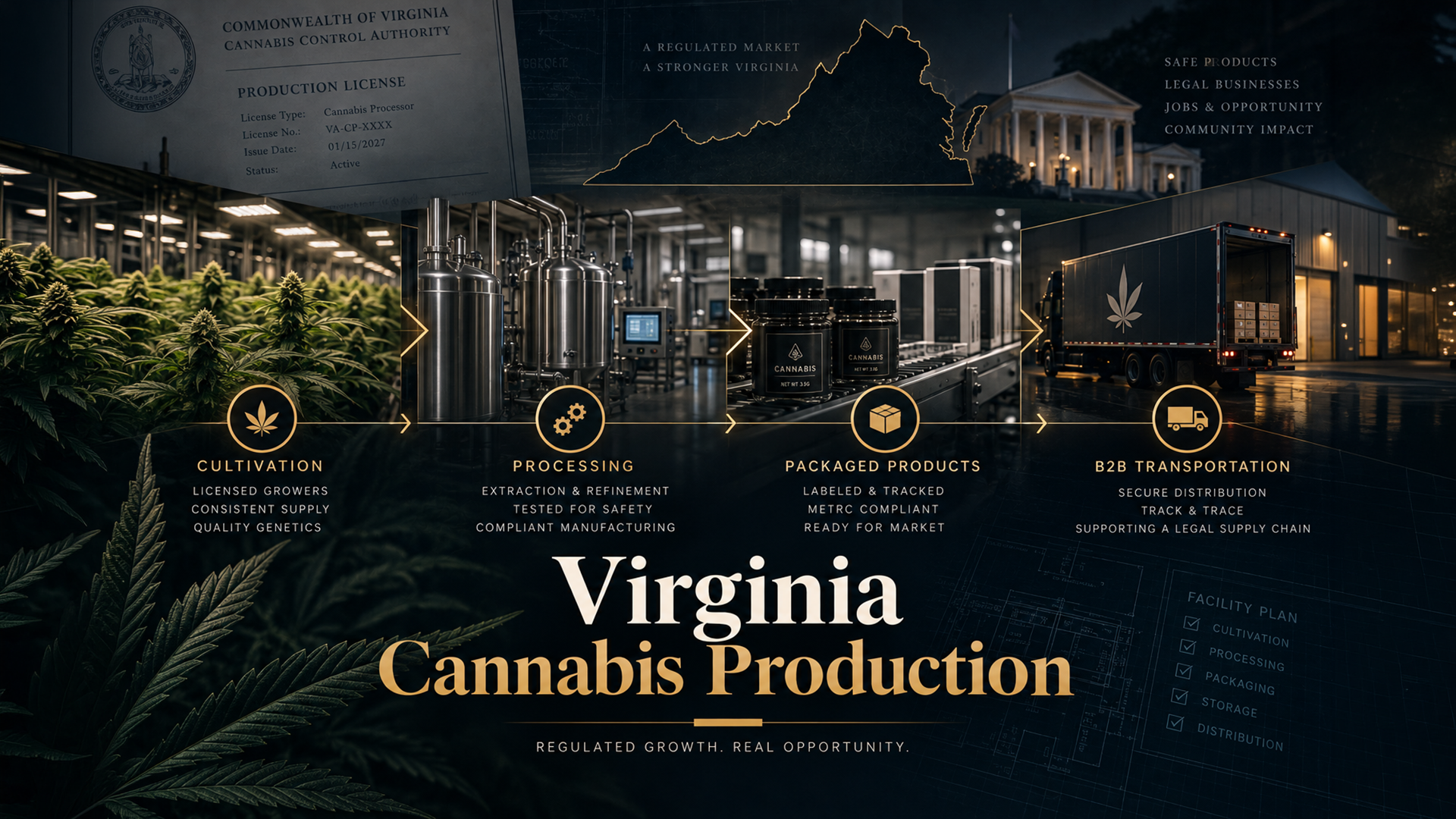
Virginia’s months-long cannabis standoff has ended. Governor Spanberger, Senator Aird, and Delegate Krizek announced an agreement — reached through the budget process — to create a regulated adult-use retail cannabis market. Sales are set to begin July 1, 2027.
The compromise is not a straight return to the General Assembly’s original framework, nor a full adoption of the Governor’s April amendments. It is a negotiated middle ground that restores some elements, holds others from the Governor’s position, and adds new regulatory provisions that appeared in neither prior version. Operators should understand all three.
What Changed From the Governor’s Amendments
- License Cap: 200 → 350
The Governor reduced the retail license ceiling from 350 to 200 in her April amendments. The compromise restores the cap to 350 — the number originally established in the General Assembly’s legislation. More licenses mean a less concentrated market, though 350 remains a hard statutory ceiling in a state where adult-use possession has been legal since 2021.
- Cannabis Equity Reinvestment Fund: Restored
The Governor eliminated the Cannabis Equity Reinvestment Fund in her amendments. The compromise reinstates it as a designated revenue destination, funded through a share of cannabis sales tax proceeds. The fund supports scholarships, workforce development, small business growth, reentry services, and community-based initiatives in communities historically targeted by over-policing. Impact applicants who had been tracking this issue since March should note: the equity infrastructure is back, though it now runs through ongoing revenue allocation rather than the upfront loan fund structure in the original legislation.
- Application Window: February 1, 2027
Neither the original bill nor the Governor’s amendments produced this date. The original bill opened applications July 1, 2026; the Governor moved that to September 1, 2026. The compromise sets the application window at February 1, 2027 — closer to the retail launch date, but further from today. Eight months is not a long runway for operators who have not yet begun preparing their ownership structures, siting analysis, and compliance frameworks.
What Held From the Governor’s Position
Retail Sales Date: July 1, 2027. The Governor’s insistence on a 2027 retail launch is preserved in the compromise. Licenses may issue as early as February 2027, but sales cannot begin until July 1, 2027. Operators will need to plan for a staging period between licensure and revenue generation.
What’s New in the Compromise
Several provisions in the compromise did not appear in either the original legislation or the Governor’s amendments.
The 25:1 Hemp Loophole Is Closed. This is the most operationally immediate change for existing hemp operators. The compromise eliminates the 25:1 THC-to-CBD ratio loophole that had allowed highly intoxicating hemp-derived products to reach Virginia consumers through the Department of Agriculture and Consumer Services with limited oversight. Regulation of industrial intoxicating hemp transfers from VDACS to the CCA. Businesses currently operating in that space face regulatory realignment before the adult-use retail market even opens.
CCA Gains Expanded Investigative Authority. The compromise grants the CCA authority to investigate ownership and control interests of licensees, audit financial relationships across licensees, maintain a public registry of licensees, and operate an anonymous tip line for reporting illicit practices. These powers extend well beyond the application review process. Deal structures, investment arrangements, and indirect ownership interests will be within scope. This is not a future concern — operators should be reviewing these relationships now.
A Defined Tax Structure. The compromise establishes a 6 percent state excise tax at launch, rising to 8 percent after July 1, 2029. Localities may layer an additional 1 to 3.5 percent on top of the existing retail sales and use tax. For operators trying to price competitively against a resilient illicit market — which the legislation explicitly targets — the effective tax burden will require careful modeling. The two-year window before the rate increase is defined, not open-ended.
Escalating Enforcement and Siting Requirements. The CCA will hold authority to impose escalating penalties for ID-check failures, up to and including license revocation for repeated underage sales. Retail establishments must be sited at least 1,000 feet from schools, hospitals, playgrounds, and drug treatment facilities. These requirements will drive real estate selection and compliance program design before buildout begins.
Bottom Line
The compromise restores key equity provisions the Governor had removed, returns the license cap to 350, and closes the hemp loophole — a significant operational change for businesses currently operating in that space. The 2027 retail timeline holds.
But the February 2027 application window is shorter than it looks. The CCA must simultaneously build the regulatory framework governing testing, safety standards, and market oversight. That is a compressed timeline for both the regulator and the regulated. Operators who are not already reviewing ownership structures, local siting conditions, and compliance positioning are running behind.
Contact Holon Law Partners for guidance on the Virginia cannabis licensing process.