Taylor Swift’s Voice Is Now a Trademark: What AI Developers and the Entertainment Industry Need to Know
by Jay Kotzker
On April 24, 2026, TAS Rights Management, LLC , the entity managing Taylor Swift’s intellectual property , filed two novel trademark applications with the United States Patent and Trademark Office (USPTO). The applications seek federal registration of spoken-word sound marks: the phrases “Hey, it’s Taylor Swift” (Serial No. 99784980) and “Hey, it’s Taylor” (Serial No. 99784979), both in Swift’s own voice. Filed under International Class 041 (entertainment information services) and grounded in use in commerce dating to at least 2011, these filings represent a deliberate and sophisticated legal strategy at the intersection of trademark law, right of publicity, and the rapidly evolving threat posed by generative artificial intelligence.
The filings are both defensive and forward-looking. They signal that Swift’s legal team , led by Venable LLP , understands what many in the industry are only beginning to grasp: that the personhood signals of major artists , voice, phrasing, timbre, stylistic cadence , have become extraordinarily valuable targets for AI ingestion and synthetic reproduction. This post examines what these filings mean, what they can accomplish, and where the legal frontier remains uncharted.
What Was Filed and Why It Matters
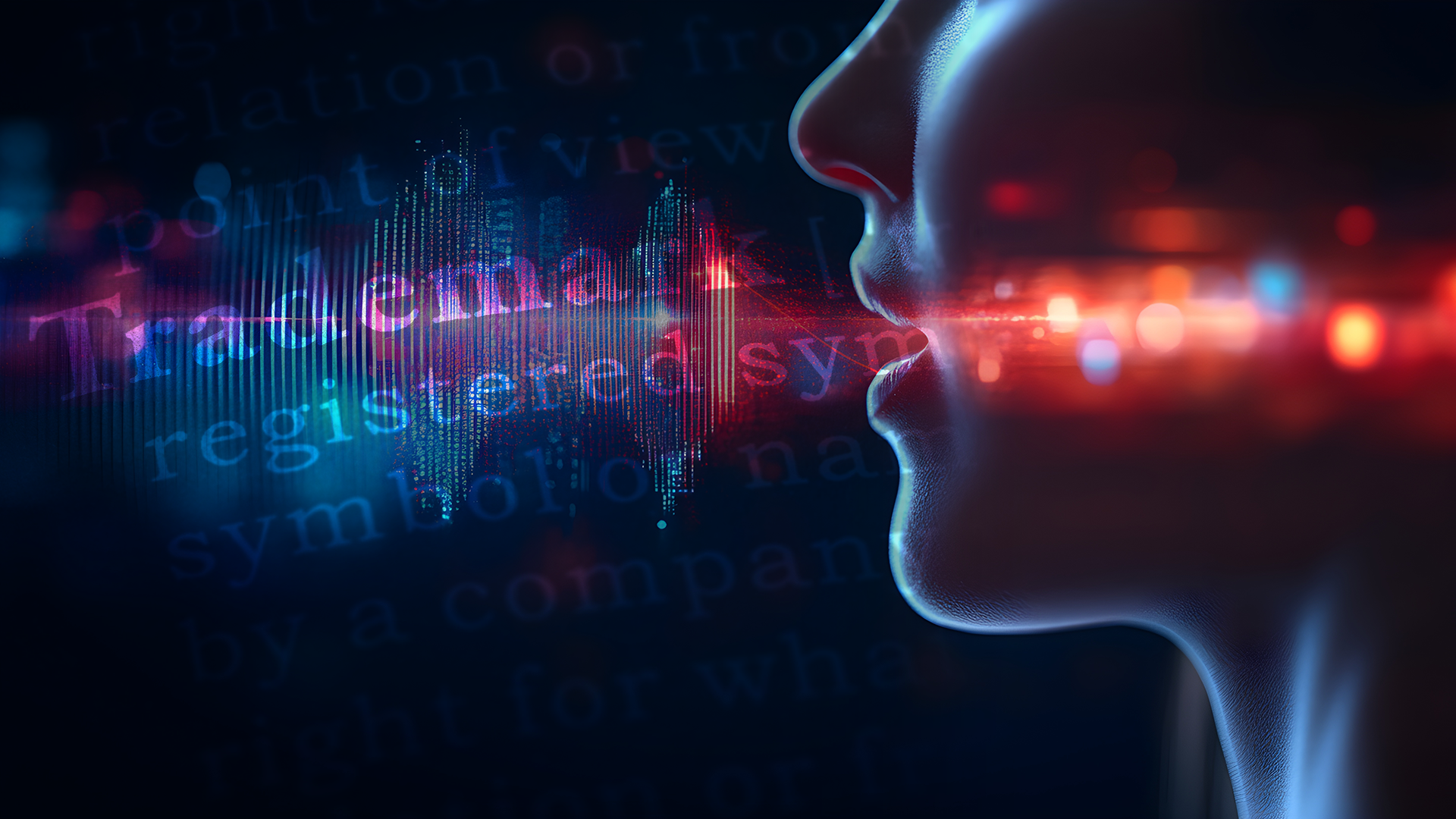
Sound marks are not new. The Lanham Act has long accommodated nontraditional “sensory” marks , sounds, scents, colors, and motion , when they function as source identifiers in commerce. The MGM lion’s roar, the NBC chimes, and the Intel tone are registered sound marks that audiences associate unmistakably with their source. What is new here is the specific subject matter: a celebrity’s own spoken voice, in her own words, registered as a brand signal.
The specimen files submitted with the applications , drawn from Amazon Music Unlimited and Spotify , demonstrate the marks in actual commercial use. Taylor Swift has used introductory spoken phrases before recorded tracks and in artist promotion for well over a decade. The filings convert those longstanding uses into federally protectable trademark assets.
The consent to register, signed by Taylor Swift herself on March 12, 2026, authorizes TAS Rights Management to register her name, likeness, voice, and signature as trademarks in the United States and abroad , a broad grant that anticipates additional filings in complementary categories.
The AI Context: Why Now
The timing of these filings is not coincidental. Generative AI has fundamentally altered the risk landscape for performing artists in a way that streaming, social media, and even digital piracy never quite achieved. Prior platforms moved content faster and farther, but they preserved a basic distinction: you consumed a work. You listened, watched, or read. If you created something new, you did so separately.
Generative AI collapses that sequence into a single act. The same system that ingests a vocal performance can, moments later, produce synthetic output that functions as a substitute , evoking the same artist, the same identity, the same audience-recognition cues , without copying any protected work in the traditional sense. AI models do not merely index expressive content. They absorb it, extracting patterns of voice, phrasing, timbre, and performance style, then recombine those patterns into outputs that audiences may perceive as authentic.
For Taylor Swift , one of the most globally recognized recording artists in history , the risk is acute. Her recordings are among the most commercially valuable training targets imaginable. A synthetic voice that sounds like Taylor Swift endorsing a product, introducing a brand, or appearing in a promotional video poses real harm: to her brand, to her commercial relationships, and to audiences deceived into believing she has authorized what she has not.
What Trademark Protection Can and Cannot Do
These filings are best understood as one layer in a multi-doctrinal protection strategy. Trademark law has both strengths and limitations when applied to AI voice and likeness problems.
- Where Trademark Is Likely to Help
Trademark protection is well-suited to address commercial output harms , the situations most immediately dangerous to artists and brands. If an AI-generated product uses Swift’s registered voice clips, name, or image marks to sell or identify goods, suggest affiliation, or create false impressions of endorsement, trademark infringement and false designation of origin claims under the Lanham Act become viable and powerful. Registered marks also support customs recordation, enabling interdiction of counterfeit or infringing goods that exploit an artist’s identity. The federal registration provides nationwide constructive notice, presumptive validity, and access to enhanced remedies , all significant advantages in litigation. - Where Trademark Falls Short
Trademark law is unlikely to reach the training act itself. AI model training is internal computation, not consumer-facing use of a mark as a source identifier. Trademark liability turns on commercial use in commerce in a way that is likely to cause consumer confusion about source, sponsorship, or affiliation. The ingestion of recordings during model training does not fit that framework cleanly. Similarly, if an AI system produces synthetic vocal content that evokes Swift’s voice but does not reproduce or use her registered marks, the infringement case requires more work. The registered sound marks protect the specific clips; they do not, by themselves, create a property right in her voice as such or in her broader vocal identity.
Right of Publicity: The More Direct Remedy
Where trademark asks whether consumers are confused about commercial source, right of publicity (ROP) asks whether someone commercially exploited a person’s name, voice, likeness, or persona without consent. That framing maps far more directly onto the AI impersonation problem. ROP claims do not require proof of consumer confusion , only that a recognizable identity attribute was commercially exploited without authorization.
This distinction is significant for AI contexts. The harm may be identity substitution , a synthetic endorsement, a fake promotional clip, a deepfake commercial , even when no registered trademark is copied and no consumer sees a brand label. Taylor Swift’s trademark filings strengthen her enforcement posture against synthetic endorsements and branded uses. But a comprehensive AI protection strategy requires ROP as an independent and primary cause of action, particularly given the patchwork of state ROP statutes and the emerging federal landscape under the NO FAKES Act and related legislation.
A New Doctrinal Frontier: Personhood Marks
Swift’s strategy implicitly proposes something the law has not yet formally recognized: a category of trademark protection for what might be called “personhood signals” , voice timbre, stylistic signatures, and biometric-adjacent identity features that audiences associate with a specific human being. Traditional sensory-mark doctrine asks whether a sound, color, or scent functions as a source identifier in commerce. It was not designed to address AI systems that ingest and reconstruct the very signals by which human identities are recognized.
The USPTO has not established examination standards for sound marks that seek to protect voice identity rather than merely a particular audio clip. Courts have not tested whether a registered spoken-phrase mark in an artist’s voice can stop AI-generated vocal imitations that evoke her identity without reproducing the exact registered clip. These are open questions , and they are precisely the kind of questions that will define the next decade of entertainment and AI law.
The filings are therefore both defensive and experimental. They are designed to build a body of registered IP assets that, in combination with copyright, right of publicity, and contract rights, create overlapping layers of protection. No single doctrine is adequate to the challenge. The value of the trademark strategy lies in adding a layer that copyright law cannot provide: protection for source-identifying brand signals that exist independently of any specific copyrighted work.
Implications for AI Developers and the Industry
These filings carry important implications for AI developers, platform operators, entertainment companies, and brands that work with or deploy generative AI tools.
- For AI developers and technology companies: The existence of registered sound marks in an artist’s voice increases the legal risk associated with deploying AI-generated content that mimics or evokes that voice in commercial contexts. Even if training-phase liability remains legally uncertain, output-phase exposure is real and growing. Risk assessments should address not only copyright clearance but also trademark and ROP exposure in AI-generated content pipelines.
- For brands and advertisers: Using AI-generated content that sounds like, looks like, or evokes a recognizable artist without authorization creates significant legal exposure under trademark, false endorsement, and right of publicity theories. The defense that “no actual recording was used” does not resolve the analysis. Synthetic outputs that function as endorsements can be just as actionable as real ones.
- For performing artists and their counsel: Swift’s filings offer a model worth studying. Building a portfolio of registered IP assets , sound marks, image marks, name marks, and related registrations , in advance of AI-related disputes creates enforcement advantages that reactive litigation strategies cannot replicate. The time to register is before the deepfake, not after.
- For the legal and policy community: These filings illustrate the gap between existing IP doctrine and the protection that artists actually need in the generative AI era. Trademark, copyright, and right of publicity each address parts of the problem. None addresses it completely. Legislative and regulatory action , at both the federal and state levels , will be necessary to build frameworks adequate to the challenge.
Holon’s Perspective
At Holon Law Partners, we work at the intersection of intellectual property, AI and data governance, and entertainment law. The questions raised by Swift’s trademark filings are ones we are actively advising clients on: how to protect identity assets in an era of synthetic media, how to assess AI-related IP risk, and how to build multi-layered protection strategies that do not rely on any single doctrine.
The law is not standing still. Artists and their advisors who act now , proactively registering identity assets, assessing AI exposure, and building enforcement infrastructure , will be better positioned than those who wait for the courts to provide clarity. The clarity will come, but it will take years, and the disputes that shape it will be expensive.
If you have questions about protecting your identity, brand, or creative work in the generative AI era, we welcome the conversation.
Can a celebrity voice be trademarked?
Yes. Trademark law allows registration of sound marks when they function as source identifiers in commerce. Taylor Swift’s recent filings demonstrate how artists are using trademark law to protect voice-based identity signals in the age of generative AI.
Why does synthetic voice replication matter beyond entertainment?
As AI-generated voices become commercially viable, businesses across media, advertising, gaming, and technology face growing legal risk involving voice rights, false endorsement, trademark protection, and right of publicity claims.