March Madness®: Brackets, Buzzer-Beaters, and the Business of Trademarks (and a 1939 Origin Story)
By Jay Kotzker
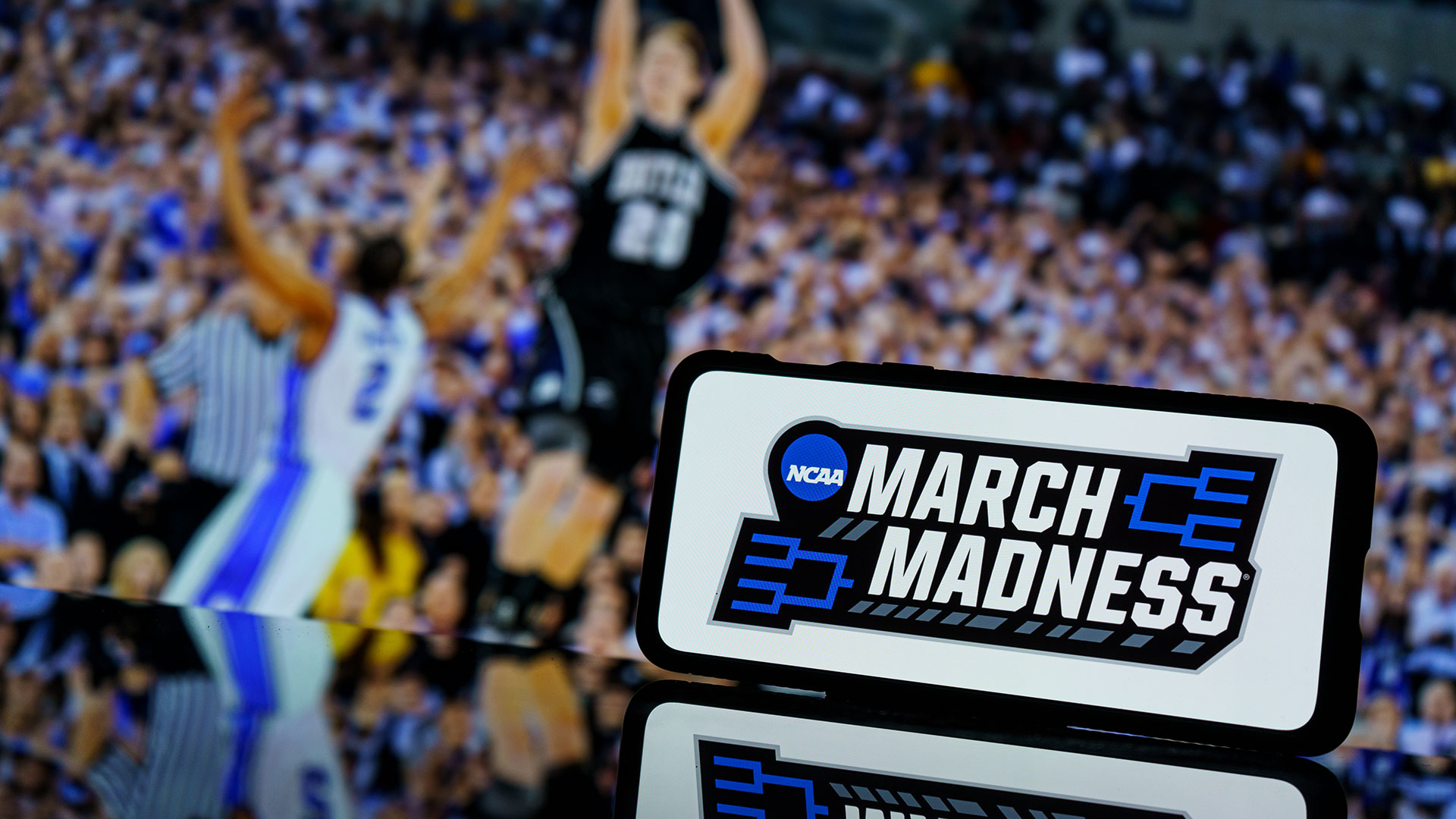
Every spring, millions of fans fill out brackets, debate Cinderella stories, and collectively lose productivity as the National Collegiate Athletic Association tips off its crown jewel: the NCAA Men’s Basketball Tournament. But behind the chaos of upsets and overtime thrillers lies a far more controlled competition—one fought in the realm of trademarks, licensing, and brand protection.
And here’s the twist: the most famous phrase in college basketball didn’t even originate with the NCAA.
Welcome to March Madness®, where the real history is just as compelling as the games.
🏀 “March Madness” Started in High School Gyms
Long before billion-dollar broadcast deals and national brackets, the phrase “March Madness” was coined in 1939 by Illinois High School Association official Henry V. Porter. He used it in an article to describe the electric atmosphere of Illinois high school basketball tournaments—packed gyms, small-town pride, and single-elimination drama.
The Illinois High School Association didn’t just popularize the phrase—it formally claimed it. The IHSA holds the registered trademark for “March Madness” (as well as “America’s Original March Madness”) and continues to oversee its own statewide tournament across multiple divisions.
From a legal standpoint, this origin story matters. The NCAA’s use of “March Madness” is not a case of ownership from inception, but rather the result of licensing and legal resolution. Courts ultimately allowed shared use, creating a rare example of coexisting rights in a phrase that now defines an entire season of sport.
What feels like a generic cultural expression is, in reality, a carefully managed piece of intellectual property with a dual lineage.
🎨 Logos, Mascots, and the Power of Visual Identity
The modern NCAA tournament is not just a competition—it is a convergence of layered trademark rights. The NCAA controls its tournament-specific branding, including marks like “Final Four®,” while each participating university brings its own protected ecosystem of logos, mascots, and visual identity.
This creates a sophisticated licensing structure where multiple stakeholders have enforceable interests in the same commercial space. A single product—say, a tournament sweatshirt—may require authorization from both the NCAA and the relevant institution, often mediated through apparel licensing agreements.
The result is a tightly controlled brand environment. When unauthorized vendors attempt to capitalize on tournament enthusiasm, they are not just infringing one set of rights, but potentially several at once.
🐻 From Wildcats to Blue Devils: When Names Collide
College basketball also offers a fascinating study in trademark coexistence. Team names like “Wildcats,” “Tigers,” and “Bulldogs” appear across multiple schools, yet widespread confusion is rare.
The reason lies in how trademark law evaluates distinctiveness. The name alone is only part of the equation. Institutional identity, geographic context, logos, and color schemes all contribute to a composite mark that consumers can distinguish. A “Wildcats” team in one conference is not likely to be confused with another when presented within its full branding context.
The friction tends to arise when that context is removed. Third-party merchandise or digital content that uses generic names without proper differentiation can blur lines and increase the likelihood of confusion—precisely where enforcement efforts are focused.
💼 Brackets, Pools, and Office Culture: Where Is the Line?
The ubiquity of March Madness extends well beyond the court. Office bracket pools, social media contests, and informal competitions have become part of the cultural fabric.
In most cases, casual, non-commercial participation sits comfortably within low-risk territory. The legal analysis changes, however, when these activities intersect with monetization or marketing. Branded bracket challenges, sponsored contests, or promotional campaigns that leverage tournament terminology can raise both trademark and regulatory considerations.
As always, the dividing line is not participation—it is commercial exploitation.
📺 Ambush Marketing: The Full-Court Press
Given the value of official sponsorships, it is no surprise that brands look for creative ways to tap into tournament excitement without paying licensing fees. Ambush marketing thrives in this space, relying on suggestion rather than direct use.
Campaigns may lean on basketball imagery, bracket-style graphics, or alternative phrasing designed to evoke the tournament without invoking protected marks. The NCAA, alongside its licensing partners—including the IHSA’s historical stake in the phrase—actively monitors these efforts.
Enforcement is not just about policing language; it is about preserving the exclusivity that underpins sponsorship value.
🧠 Final Whistle: The Real Bracket Is the IP Strategy
March Madness is often framed as a story of underdogs and buzzer-beaters. But behind the spectacle lies a parallel narrative—one rooted in intellectual property strategy, historical ownership, and modern licensing frameworks.
From a phrase coined in Illinois high school gyms to a globally recognized sports brand, “March Madness” exemplifies how powerful—and complex—trademarks can become over time.
For businesses, marketers, and creators, the lesson is both practical and enduring: you can participate in the excitement, but you must respect the architecture behind it.