
Regulatory Sandboxes and AI: Why States Are Emerging as Innovation Gatekeepers
By Holon Law Partners
Artificial intelligence regulation in the United States is not coalescing around a single, comprehensive federal framework. Instead, it is developing through a more distributed model of governance—one increasingly shaped by state-led experimentation, particularly through regulatory sandbox programs.
These programs allow companies to deploy emerging technologies within controlled environments while regulators observe system behavior, collect empirical data, and evaluate real-world risks.
A regulatory sandbox is not a deregulated space. It is a structured legal environment in which specific requirements may be conditionally modified under defined parameters, subject to ongoing oversight, reporting, and revocation. The objective is not avoidance of regulation, but the refinement of it.
Utah has emerged as an early mover in this space. In 2024, the state enacted a statutory framework addressing artificial intelligence oversight, including the establishment of regulatory mechanisms within the Department of Commerce to support controlled testing environments. These programs authorize approved participants to operate AI systems under supervisory conditions while providing continuous data to regulators.
The state has begun applying this framework in practice. In early 2026, Utah announced a pilot program involving an AI-enabled system developed by Doctronic to support the renewal of certain prescription medications under defined clinical and regulatory constraints. According to state materials, the system is limited to routine renewals, incorporates safeguards such as contraindication screening, and escalates non-routine cases to a licensed physician. The program operates under active regulatory supervision and reporting requirements.
Utah’s approach reflects a broader shift in regulatory strategy. Rather than attempting to define comprehensive rules ex ante, states are using sandbox programs to generate evidence—observing how systems perform in operational environments, where risks materialize, and which safeguards prove effective.
States are well positioned to play a meaningful role in this evolution. Many high-impact AI use cases—including healthcare delivery, professional licensing, and employment practices—fall within traditional areas of state authority. State governments also tend to operate with greater procedural agility than federal agencies and often have strong economic incentives to attract emerging technology companies.
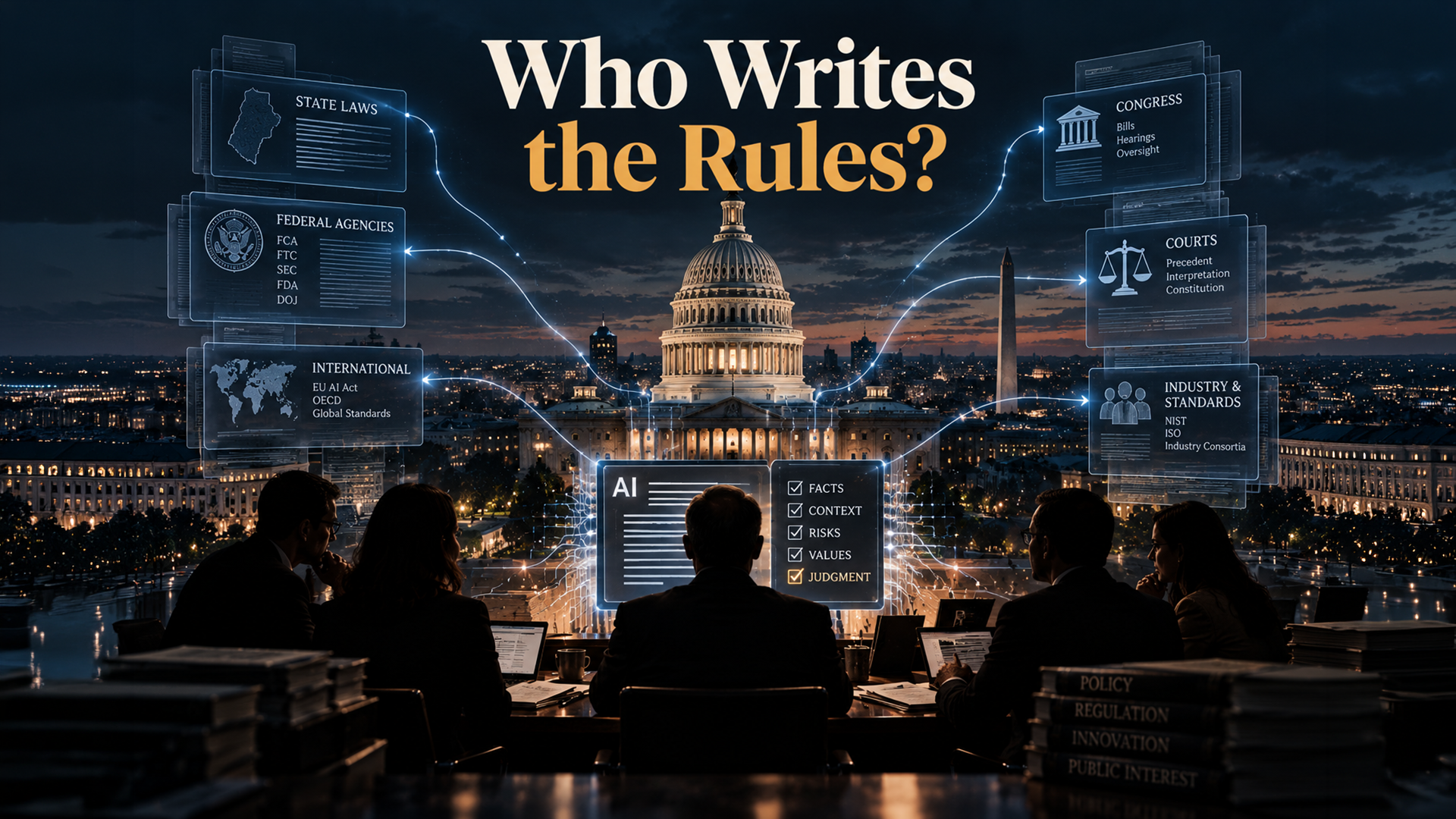
At the same time, state-level authorization does not displace federal oversight. Agencies such as the U.S. Food and Drug Administration retain jurisdiction over software that may qualify as medical devices, while the Federal Trade Commission continues to enforce prohibitions against unfair or deceptive practices. Participation in a state sandbox does not create immunity from federal law, and companies must evaluate regulatory exposure across multiple layers of authority.
Professional accountability frameworks likewise remain intact. Organizations such as the Federation of State Medical Boards have consistently emphasized that while AI may augment clinical decision-making, responsibility must remain clearly attributable to licensed professionals. These principles are likely to serve as a baseline constraint on autonomous system deployment in regulated fields.
From a legal and operational perspective, the significance of sandbox programs lies less in what they permit than in what they reveal. These environments are beginning to surface how liability attaches, how standards of care evolve, and how oversight functions in practice when AI systems are deployed in real-world settings. They also underscore the importance of governance structures that extend beyond policy statements into technical controls, escalation protocols, and auditability.
For businesses, participation in a sandbox is not simply an innovation opportunity—it is a governance commitment. It requires transparency, disciplined documentation, and sustained engagement with regulators. Organizations must be prepared to evidence system performance, manage edge cases, and demonstrate that human oversight mechanisms are both meaningful and operational.
Regulatory sandboxes are unlikely to remain a peripheral feature of AI governance. They are increasingly functioning as a primary mechanism through which policy is iteratively developed and validated. In that sense, they represent a shift from static rulemaking to dynamic, evidence-based regulation.
At Holon Law Partners, we view this evolution as an inflection point. It signals a move toward governance models that are adaptive, data-driven, and grounded in operational reality. For companies navigating this landscape, the critical question is no longer whether regulation will emerge, but how to engage with it strategically—early, constructively, and with a clear understanding of both risk and opportunity.
Disclaimer
This material is provided for informational purposes only and does not constitute legal advice or create an attorney-client relationship. Organizations should consult qualified counsel when evaluating specific regulatory obligations or participation in sandbox programs.